Thursday, May 16, 2013

KURDISH CLOUDS OVER DARKENING WEST ASIA HORIZON....


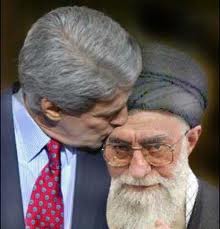
 “Those who control the present control the past”*....this is a candid representation of the sordid and most infamous White House Murder INC, in the Levant and way Beyond....  TFEH

In 1969 when I was posted to Ankara , the word Kurd was almost a taboo in Turkey .Kurds were called mountain Turks .But the truth  was brought home to me very vividly a few months after my arrival when  after  a long tour of the Black Sea coast including Samsun , Trabzon and cutting via Erzurum ( cold and gloomy) and Bingol ,I and family  drove into Diyarbakir, with its black rock walls , the largest Kurdish city ( although some people claim that Istanbul, a mega polis of 12 million ,might have surpassed it in the number of Kurds) . After installing my family in the hotel I came out to look for a restaurant .Lo! I was surrounded by five six young boys singing Kurdish songs and repeating ‘Kurdum, Kurdum ‘ ( I am a Kurd ,in Turkish)

I visited Diyarbakir a few times more, the last time in 1997.

Turkey’s Kurdish problem is as old as the establishment of the secular Republic by Kemal Ataturk .The Kurds have been inhabiting the east and south east of Turkey much before the Turkish tribes started arriving in from central Asia in 11th century. Even now the percentage of Turkish citizens who came from Turkistan in central Asia would be less than 15%.

As late as around 1980 a Turkish minister was charged when he said that there were Kurds in Turkey and he was a Kurd .It was in end 1980s that president Turgut Ozal publicly proclaimed the presence of Kurds in Turkey and admitted to his own part Kurdish blood. It is suspected that he was poisoned by those who believe in the unitary state since he was trying to find a solution to the vexing problem which had enflamed a few years earlier.

The current Islamist AKP has instituted an enquiry into Ozal’s death .Hopefully it will not be to further humiliate the proud Turkish armed forces, which along with Republican Peoples Party established by Kemal Ataturk and virulently pan Turanian party, the MHP (National Action party) oppose concessions to Kurds on even matters of culture and language .The continuing AKP tirade and actions against the military could one day lead to a blowback. In Sunni Muslim states, the struggle between the ruler and cleric continues (Prophet Mohammad was both the religious leader and the military commander) at the moment the military is on the back foot in Turkey as well as in Pakistan and Egypt.

The Kurdish rebellion against the state was led by Abdullah Ocalan (Ojalan) and began in early 1980s with the Marxist Kurdish Labour party (PKK) as the vehicle.

Part I , below covers the period from the beginning of the insurgency and the capture , sentencing and imprisonment of Ocalan in 1999.

*During the rule of the secular parties in Turkey until 2002, history of Turkey during its Anatolian past was not highlighted and of the Byzantine/ Roman etc era glossed over .As if the history began with arrival of the Turkish tribes into Anatolia in 11 century .Since the arrival of Justice and Development party (AKP) in end 2002 and Islamisation the republican era is being glossed over.

ABDULLAH OCALAN AND TURKEY’S KURDISH PROBLEM
     
 Kurdish rebel leader Abdullah Ocala (c=j), sentenced to death for treason on 29th June 1999 after a trial by a Turkish Tribunal at the Imrali island (where coincidentally Prime Minister Adnan Menderes and his two colleagues were hanged after the 1960 military takeover), represents the violent face of resistance since millennia by a minority tribe, community or a nation against forced assimilation by majority ethnic, linguistic or religious groups. In view of Turkey’s laws, its judicial system and the fever pitch passions aroused against its enemy number one, with masses baying for Ocalan’s blood, the death sentence was not surprising. Since 1984, Ocalan led PKK (Kurdish Workers Party) rebellion for a Kurdish state in South and East of Turkey has already cost over 45,000 lives, mostly Kurds including 12000 female cadres and also includes over five thousand soldiers. Thousands of Kurdish villages have been bombed, destroyed, abandoned or relocated and millions of Kurds have been moved or migrated to shanty towns in South, East and West wards .Added to the migration for economic reasons, half the Kurdish population now lives in Western Turkey, making disentangling of the two communities extremely difficult. With 1/3rd of Turkish army tied up in South East, the cost of countering the insurgency has mounted to $6 to $8 billion per year , shattered the economy of the region and brought charges of police and military brutality and human rights violations in the West to which Turkey is linked through  NATO and OECD. It has also harmed its chances of joining EU, with which it has a Customs Union. The consequences of Ocala’s sentence carried out or not will be a major defining moment in the history of the Republic. Already April 1999 Elections have highlighted an upsurge of nationalism and a swing for ultra-nationalist National Action party (MHP), giving it second  slot from  nowhere  and the top slot to Prime Minister Bulent Ecevit’s Democrat Left Party (DSP) for his Govt’s successful hounding and capture of Ocalan ,further polarising Turkey’s already fractured polity.

The problem was brought to a head when late last year Turkey, hoping to give a hammer blow to the Kurdish rebellion, threatened war on Syria to force out Ocalan and PKK, sheltered in Syria as a lever against Turkey for denial of its fair share of Euphrates waters and   irredentist claims over Hatay province annexed to Turkey in 1939 (but still shown within Syrian maps).  Egypt and others including Iran helped defuse the situation but a somewhat isolated Syria had to expel Ocalan, who first went to the Russian Federation and then to Rome looking for asylum .The Italians instead arrested him on a German warrant .But sensing further mayhem and the strife it would create among its Kurdish and Turkish populations, FRG got cold feet and did not extradite him .Nor was he extradited to Turkey causing bad blood between Turkey and EU. In mysterious circumstances with some Greek assistance Ocalan then disappeared looking for a safe haven but found none. He was eventually apprehended in Nairobi on 16 Feb,1999 by Turkish agents assisted  by other countries and brought  handcuffed to a rapturous Turkey .His capture  was followed by violence and  demonstrations in Turkey and Europe ,where Kurds number 850,000  among  4 million Turkish immigrants ( 3 millions in FRG alone of which nearly half a million are Kurds) .

Majority of Kurds in Turkey would be satisfied with cultural autonomy but the hounding of Ocalan, touched an emotional chord uniting Kurds all over the world against their persecution over millennia and suppression of their aspirations for autonomy and freedom, dashed time and again. The Kurdish nation totaling over 25 million straddles mostly the mountainous regions of Turkey (14 in 70 million), Iran (8 out of 70 million), Iraq (4 out of 20 million) and with more than half million in Syria and another half million in Russia, the Caucasus and Central Asia.

Kurds are an Aryan Iranian people caught up in ethnic upheavals and  intermingling of Aryan, Turkic and Semitic races going on since two millennia from  the Eurasian steppes to the Mediterranean , the Gulf and the Arabian Sea .But Kurds have lived in the region since they shifted from the steppes in 2nd millennium and some can  perhaps claim Kassites and Mitannis as their forefathers .Most descend from the Iranian Medes .They were  mentioned as the Kurduchoi who had harassed  Xenophon and his Ten Thousand  retreating towards the Black Sea from Babylon in 401 BC .

Turks started moving into Anatolia only in 11th Century after the Byzantine defeat at Manzikert. In spite of the long stay in the region, the Kurds, most Sunni Muslims, have failed to carve out a kingdom, barring petty dynasties at Diyarbakir and Kermanshah region during 10th and 11th centuries and some principalities during early 19th century. Salahaddin remains their greatest medieval hero. They have been kept divided, abused and exploited as pawns by the ruling Persian, Turkish or Arab empires and colonial powers, enjoying autonomy only when the Empires were weak .Sunni Ottomans granted them autonomy and used them to guard the frontiers against Shea Safaris of Iran. Turkey, Iran, Iraq and Syria might have adversary relations with each other but when it comes to Kurds they close ranks but throughout history whenever suppressed the Kurds become outlaws and take to the mountains.

Belonging to Iranian family, Kurdish is spoken in 5 dialects and many sub-dialects but the divisions are reflected not only in the dialects or the countries the Kurds inhabit. Differences among them have persisted throughout history .In North Iraq the Kurds are split among Patriotic Union of Kurdistan (PUK) of Jalal Talebani and Kurdish Democratic Movement (KDM) of Masud Barzani who have been fighting each other since decades. But the Iraqi Kurds ,even when divided have nevertheless ,enjoyed  some semblance of autonomy first under the British mandate , then the leftist regime of Brig Kassem and even under the kid glove and poisoned sword treatment of Saddam Hussain, with an almost free hand during Iran-Iraq War and then US led protection after the Gulf War . Thus in spite of the Kurdish identity having been suppressed in the unitary Turkish state, the idea has been kept alive across in Iraq.

The Iranians have manipulated Iraqi Kurds as had the Russians the Iranian Kurds during the 2nd World War encouraging them to declare the Mahabad Republic, which after the Russian withdrawal in 1946 was annihilated. Iran gives shelter to Iraqi Kurds and PKK and supplies them with arms .In return after the 1979 Khomeini revolution the Iraqis supported Iranian Kurds. But unlike Iraq ,Iran and elsewhere , the Kurds of Turkey are the  most well integrated with other citizens .Many have moved  west wards  in recent decades, making Istanbul ,with over 1 million Kurds one of the largest Kurdish cities. Unfortunately the Kurds have been subjected to growing harassment and discriminations since the Kurdish insurgency began , although they enjoy equal legal rights .Ataturk’s right hand man Ismet Pasha, later President had Kurdish blood as did President Turgut Ozal .The former Foreign Minister and the Parliament Speaker Hikmet Cetin ,a full blooded Kurd is another of many such examples of prominent Kurds in Turkey.

However , the 1990-91 Gulf War proved to be a water shed in the evolution of the Kurdish problem. The current nebulous and ambiguous situation in North Iraq came about when at the end of the War, US President George Bush without perhaps consulting the coalition’s Arab Allies like Saudi Arabia and Kuwait encouraged the Kurds (and the hapless Shias in South) to revolt against Saddam’s Sunni Arab regime. Turkey, as it would have given ideas to its own Kurds, Saudi Arabia and others opposed the creation of a Kurdish state in the north and a Shia one in south Iraq .The latter would have only strengthened Shia Iran. The hapless Iraqi Kurds and Shias paid a heavy price. In the background of the 1988 gassing of Iraqi Kurds and international media coverage of their pitiable condition, escaping Saddam Hussein’s forces in March 1991 led to the creation of a protected zone in North Iraq patrolled by US and British warplanes. The Kurds have since even elected a Parliament, which did not function. But Barzani and Talebani ran almost autonomous administrations in their areas; much too Turkish disquiet as this also allows PKK a free run. An attempt by PKK in 1993 to have an understanding with Barzani, who is sympathetic to PKK, soon came apart .Many times Iraqi Kurds have cooperated with Turkish military in its many punitive forays against PKK in North Iraq .But the attitude of Iraqi Kurds to PKK, in spite of differing outlook and philosophy remains ambivalent but their natural sympathy cannot be in doubt.

President Turgut Ozal, confident after turning around the Turkish economy , perhaps looking for a larger role in the region by  bringing Iraqi Kurds under Turkish control , softened the rigors against his own Kurds .He publicly proclaimed in1991 that there were 12 million Kurds in Turkey and  allowed them use of  Kurdish in speech and music. Earlier in 1989 acknowledgement of his Kurdish ancestry had ended the legal taboo on the use of word “Kurd” since 1924. The Kurds had to be called Mountain Turks. On this writer’s first visit in 1969 to Diyarbakir ,the biggest Kurdish city ,he  was  soon accosted by  urchins singing Kurdish songs and muttering defiantly  ‘Kurdum !Kurdum’ (I am Kurd ) As recently as 1979, when a former Cabinet Minister for Public Housing said that there were Kurds in Turkey and he himself was a Kurd ,he was charged and sentenced  to 2 years imprisonment. In 1924 the Kurds were also debarred  from adopting Kurdish names so they take on Arabic ones. They, therefore, found Turkish protests hypocritical when Bulgaria forced its Turkish origin citizens to take on Bulgarian names in late 1980s.

Not only Ozal but many Turks remain fascinated with the dream of ‘getting back’ Ottoman province of  Mosul and Kirkuk ; which were included within the borders of  the Republic by the National Pact of 1919.The oil rich Mosul region was annexed to Iraq by the British in 1925 much to Turkish unhappiness  after the ceasefire .At the same time Turks remain equally apprehensive of  an evolution of  an independent Kurdish state  in Iraq which will act as a magnet for its Kurds .In the aftermath of the 1991 Gulf War Turkey lost out much instead of gaining. The closure of Iraqi pipeline, economic sanctions and loss of trade with Iraq, which used to pump in billions of US dollars into the economy and provide employment to hundreds of thousands, with 5000 trucks roaring up and down to Iraq, has only exacerbated the economic and social problems in the Kurdish heartland and the center of the rebellion.

Who is Abdullah Ocalan !
Nicknamed Apo (uncle in Kurdish ), Ocalan was born in 1949 at Omerli ,a small town on Euphrates  in Urfa ( ancient Edessa) .His family took  the surname of Ocalan ( avenger ) having rebelled against Ataturk’s Republican Turkey in 1920s .One of  seven siblings ,Ocalan  claims a Turkish grandmother and some Arab blood too and was greatly influenced by his strong willed mother. With mixed population in South Turkey , many  people speak Turkish, Kurdish and Arabic.

More fluent in Turkish than Kurdish, Ocalan was a bright student and after the usual religious education in the village Mekteb, at which he excelled, he won a scholarship to the prestigious Political Science Faculty at Ankara, a breeding ground for Turkey’s intellectuals, civil servants and even politicians .In the heady days of early 1970s after the Paris students uprising it had become a center of leftism. To begin with, Ocalan was an admirer of Ataturk but the total suppression of ethnic or cultural pluralism as if Kurdish history and identity did not exist and a spell in jail, following a crackdown on radical students after the 1971 military intervention, where he held discussions with similar minded Kurdish students, turned him into a hardened Kurdish nationalist.

Ocalan took the first tentative steps in 1974 to initiate a Kurdish liberation movement with 6 others at Ankara. But PKK (in Kurdish -Partia Karkaran-e Kurdish ) -an alliance of workers , peasants and intellectuals for a democratic independent Kurdistan based on Marxist –Leninist principles was officially founded with 12 others in the village of Lice in Diyarbakir on 27 Nov 1978 .The circumstances of its origins, tribalism , feudalism , the grinding poverty of the region compared to the growing prosperity in Western Turkey makes Marxism an abiding ideology which attracts poorer but educated youth of both sexes. The first attack , unsuccessful., was made in 1979 on a Kurdish MP Mehmet Bucak , now a pro-establishment anti-PKK Kurdish clan leader? But the real violent incidents , which brought recognition to PKK were carried out in 1984 in Sirit and Hakkari near the  Iraq-Iran border in which two soldiers and a dozen civilians were killed and PKK propaganda was broadcast.  From a few hundred in 1984 the number of PKK cadres has now gone up to many thousands and had peaked in the first half of 1990s when PKK was churning out 300 fighters every quarter. If the state has used all brutal power at its command the PKK has fought back savagely by killing govt village guards, teachers, doctors, village headmen, apart from innocents and the military and police soldiers. Brutal reprisals and killings by security forces brought in thousands of volunteers to PKK.

Ocalan left Turkey for Lebanon just before the 1980 military intervention preceding which in two years of almost total anarchy, over five thousand people had been killed in clashes between leftists and rightists (grey wolves) –the latter now form the MHP cadres and were then encouraged by the establishment to counter communism. The military junta feared that Islamic revivalism and Kurdish nationalism will undermine the state .So it banned many political parties and debarred politicians ,came heavily on media, politicians , students and Kurdish radicals .But the prisons  proved to be academies for new recruits to the PKK cause. Ocala first contacted PLO leftists but was soon adopted by the Syrians, who provided him a residence in Damascus and the Beck valley for training his cadres. He spent some time in GDR, but mostly functioned from Syria and Lebanon

APO turned out to be a ruthless and cruel leader, with a charismatic hold over his followers and in spite of never returning to Turkey, he is revered by his dedicated followers and feared and obeyed by most. Except for 1993 cease-fire interregnum the PKK- State violence increased  from 1991 and continued unabated till 1996 reaching peaks during the 1992 Nauru  and after the break down of  March 1993 cease-fire. But in spite of the success of  the Turkish forces in curbing PKK ,in areas bordering Iraq and Syria i.e.  Mardin , Nusaybin, Cizre and around Diyarbakir, Tunceli , the Turks dare not venture out after the  dusk.

The roots of the Kurdish problem
The roots of the Kurdish problem lie buried deep in the Turkish psyche .The seeds were sown during the decline of the Ottoman Empire and the birth of the Turkish Republic after the 1st  World War. The Ottomans granted religious freedom to its Christian, Armenian and other millets with autonomy in their personal laws and education .Turks complain that the Christian West used the stick of religion and nationalism in Eastern Europe to break up the Empire during the 19th and early 20th century .The first to leave were the Balkan Christians and in late 19th century it was feared that even the Kurds might desert like the Egyptians. But the last straw was the revolt by Muslim Arabs , for the Ottomans always were Muslims first and then Turks .In fact the word ‘Turk’ until Ataturk endowed it with dignity – How happy is he who says he is a Turk.- now written all over Turkey -was used as a term of contempt by the Ottoman elite.

Hence Turks manifest a pervasive distrust of any cultural or autonomous movement that might lead to fragmentation of the unitary Republic .It revives memories of western conspiracies against Turkey and the ungratified 1920 Treaty of Sevres forced on the Sultan by the First world War victorious Allies which  would have divided Anatolia providing outright independence to the Armenians and autonomy to Kurds leading to independence and zones of influence for France, Italy and Greece .The Ataturk led War of Independence and a new Treaty of Lausanne in 1923 did away with any division and there is no mention of Armenia or Kurds in it–not even their language Kurdish but it permitted Geeks , Armenians and others to speak their tongues

To begin with Ataturk himself had talked of Turks, Kurds, Lazes and others but a  dramatic change came over in 1923 -24 and he opted  for a unitary state .Perhaps because of the British detachment of the Mosul region , ambivalent attitude of many Kurds and minor revolts after the Treaty of Sevres .Free from fissiparous forces he wanted to concentrate on modernization and  reforms ,many against religious obscurantism .In 1924, he abolished  the Caliphate and the Kurds  were just turned into non-persons ; their language, music, dress and culture ,even use of Kurdish first names made illegal .The conservative Kurds led by Sheikh Said, a follower of Nakshbandi sect ( as are  many  present day Islamist leaders like former Prime Minister Necemettin  Erbakan ) who had earlier enjoyed almost total  autonomy and religious freedom in their domains  rebelled against the ungodly laic state in 1925.The  fledgling Republic, under pressure from the radicals , suppressed ruthlessly with ‘exemplary ‘ punishments the rebellions ,some of which  lingered on into 1930s e g in Tunceli.( Dershim).The  influential Kurdish  families were relocated to Western Turkey , which were rehabilitated back only after  the introduction of multi- party democracy and slackening of unitary state’s heavy hand in 1950s .

Turkey’s Constitution describes itself as a Laic state, which according to many is more Jacobin than genuinely secular. It is based on nationalist philosophy of Zia Gokalp, himself a Kurd, who unfortunately used for laic /secular the word “la din” i.e. anti- religion. After the founding of the Republic the Christian minorities of Turkey were exchanged with Turks from Greece and the remaining squeezed out later. Few left in South East are leaving now .So the concept of secularism in Turkey has somehow become anti- religion and negative and tends to become anti this or anti that and intolerant .

The Sunni dominated police establishment have regularly harassed the Shiite Alexis, ironically perhaps the original Turcoman who helped conquer Anatolia and now the Kurds. But perhaps the problem lies in the fatal belief of the establishment; a curious amalgam of military led secular elite and Sunni dominated interior ministry organization to resolve problems by force as a compromise might be seen as weakness. It  considered Islamic revivalism and Kurdish rebellion as  two major threats to the security, stability and integrity of the State .But left of Center Social Democrat Party( SHP) then led by Ismet Pashas’  intellectual son Erdal Inonu (who became Deputy PM in Suleyman Demirels’ coalition Govt (in 1991-95) had come to the conclusion in 1990 based on a study that neither Kurdish nationalism nor Islamic fundamentalism posed a threat to the Republican order .(But since end 2002 when Islamists AKP un expectedly won a thumping almost two/third majority with only 37 % of the votes cast , Islamisation of the seculr republic has begun )Many other subsequent reports had also confirmed the same conclusions , underlining that most Kurds want respect for their identity ,use of Kurdish language for education and Television and cultural freedom.        

Apart from foreign hands, especially of the neighbors, the Kurdish problem has now acquired complex dimensions Attempts to even look at the problem dispassionately have come to naught .Unfortunately Ozal, who helped bring out the problem into the open died in April, 1993. Had he lived on he might have found a solution as he had wanted to do- ‘ a last service to the nation’ Soon after his death , the unilateral cease fire by PKK , tacitly observed by the Govt  , broke down  when in May, 1993 near Bingol 33 unarmed soldiers were massacred by PKK .At first the situation was not clear but PKK countered that the State had not keep its ‘promise’ and had continued to lean heavily on militants and Ocalan owned it. New Prime Minister Tansu Chiller’s probing attempt in 1974 to look at the Basque model was brushed aside by the military Pashas and President Demirel , who has shown much less vision than Ozal in handling the problem.

 Many analysts feel that under the pretext of guarding Ataturk’s unitary state, any solution to the problem has been thwarted by the vested interests, which have also been cited as the main obstacle for keeping the Islamists out of power as the secular elite does not wish to share the cake with the rising conservative classes from the heartland of Anatolia and elsewhere, who support Islamic parties. There is also considerable leakage in the billions of dollars spent in security operations against the Kurds and scandals crop up from time to time. Like rebellions elsewhere PKK has been accused of making money from the drug trade (also from donations, extortions and taxes in Turkey and Europe) but many in the establishment have also been accused of the same charge, with scandals cropping up from time to time .Many, including politicians talk of the long shadow over democracy of Turkish military, the self styled guardians of Ataturk’s unitary and secular state, making political solutions difficult.

The Kurdish problem also affected adversely Turkey’s aim of becoming full member of EU, although it might not be the real cause .Apart from the fear of 70 million Muslim Turks having a run of their countries, European diplomats in private confess that they were happy to have Europe’s border at Bosporus and would not like to extend it to states ruled by the likes of Saddam Hussein, Ali Khameini and Hafez El-Assad. Because of Turkey’s continued importance  for NATO , PKK’ s Marxist philosophy and Soviet support earlier, PKK remains an anathema  to USA  but Europeans  with  Kurdish populations in their countries are  more sympathetic to their plight. Peaceful espousal of the cause has been allowed by Europeans in spite of Turkish protests but when the Kurds have resorted to violence and started attacking Turkish interests as in 1993, they have come down heavily. Europe has provided a safe haven to expelled and persecuted Kurdish MPs and others. Many Europeans Parliamentarians and others have extended vocal support to the Kurdish cause raising Turkish heckles and accusations of western conspiracy. Mrs. Dannielle Mitterand was a very steadfast supporter and helped organise in 1989 the first international conference on Kurdish problem in Paris .But compared to say Kosovo, Europeans in general and USA in particular have been soft on Turkey’s human rights record, because of the need to humor an ally, who is also a useful buffer against the volatile Middle East and for its links and influence in the Caucasus and Central Asia.

Forming 20% of the population, normally 80 to 100 Kudish deputies get elected in a house of 550, but their cause is not taken up by their parties and they are not allowed to form a Kurdish party to ventilate their grievances politically. Such attempts lead to harassment, removal of immunities, jailing and even killings of MPs and their supporters. Kurdish parties like HEP ( Kurdish Labor party), DEP ( Democracy party) and HADEP (People’s Democracy party) were obstructed and suppressed  and  their members harassed, jailed and even killed .Many  times the radicals across the board set the Agenda discouraging any peaceful and meaningful discussion of  the problem in the Parliament or outside .Since early 1990s attempts to  explain the Kurdish view-point through media by newspapers like Ozgur Gundem ( Free Agenda), Ozgur Ulke (Free Country) and others have  been stopped through harassment , imprisonment ,and even outright murder of  journalists and distributors with connivance or help from the establishment. Main line media was punished for writing about Kurds, their problems and even mishandling of the rebellion. When Urfa born Kurdish singer Ibrahim complained that he could not sing in his mother tongue he had hell to pay .Kurds and even Turks including famous writers like Yassar Kemal continue to be harassed and imprisoned for writing about Kurds and their problems   .                .          

But the Govt statements and action before and after the verdict of death for Ocalan showed caution and circumspection maintaining that the law take will take its course. The Parliament even replaced the Tribunal’s third military judge with a civilian one. Although the death penalty remains on the statutes book, since 1984 , of many scores convicted to death  not one has been hanged .The Ocalan verdict would have been challenged in the Supreme Court and then go for ratification via its Judicial Committee to the Parliament and  finally to the President. And then an appeal can be made to the European Court. .Any show of leniency in the highly charged atmosphere seemed improbable, but with time consumed in legal formalities it might be possible to let Ocalan live on .Making him a martyr would have been is a terrible mistake, apart from re-igniting the insurgency.

Unlike the violent protests in Turkey ,Europe and elsewhere  against Ocalan’s capture , the reaction after the verdict was muted and peaceful barring some violent acts in Turkey. No doubt, Ocalan was in custody and promised to work for peace and bring down PKK fighters from the mountains. Unlike some others (reportedly ZA Bhutto) awaiting a certain death sentence, from the glass cage, Ocalan’s sober performance was admirable. He came out as a cool and unperturbed leader ,clear and consistent in his defense  Apart from 1993 conditional cease-fire , he had offered  the olive branch  many times in 1994 and 1995 .The first offer was made in an interview in mainline Hurriyet newspaper in 1990.After the rapturous joy in Turkey at Ocalan’s capture and an orgy of celebrations after the death verdict led in many cases by those who had lost a dear ones  in  the  war against PKK, there was a feeling of the night after the binge ,some  signs of  rethinking ,even some softening of attitude towards the Kurds.

Poet philosopher PM Ecevit was opposed  to death sentence in principle. He  initiated steps for Repentance Law to pardon PKK cadres not involved in violent acts. The insurgency became  much degraded on the ground. Ideological benefactor former USSR no longer exists. Syria was more interested in peace with Israel although its grouse about Euphrates water still remains. Greece burnt its fingers in the Nairobi incident. There has also been a chorus of demand from the West including USA against the hanging  But political parties took   rigid and some irreconcilable positions .There was always a danger of  politicians outdoing each other in  whipping up  national fervor for short term political gains ,specially the Ultra-nationalist MHP which  recently rose  like Phoenix .Many a times even  when politicians had wanted to calm the situation  the establishment puts spanners in the path e g the continued  harassment  in 1993 even  when the state had tacitly accepted the  PKK cease fire and the creation of  the Hezbollah with its murderous squads in East against PKK , halted only when it started expanding to the West .

And the Republic instead of resolving problems politically resorts to legal measures i.e.  closing down political parties ;not only Islamic but others ,even the one founded by Ataturk after the 1980 intervention and military takeovers  or extra-constitutional means like military threats to force out elected Govts  as  in 1971 and 1997 .was  it confident enough  and ready to address the underlying, social and economic causes of the rebellion ie  the Kurdish aspirations for cultural autonomy and economic development of the region .Many analysts feel that after 75 years, the Republic has matured enough and is strong enough to  resolve  problems politically  Turks must think and decide that while the Empire was built on the loyalty to the Turkish house of Osman and Islam , the Republic as a secular unitary state, with some  loosening of state’s heavy hand and  Jacobin attitude having taken place since 1950s ,perhaps  time has come for more flexibility in resolving  problems through discussion and mutual accommodation. But many a times the Turks have the habit of turning logic upside down .

However Turkish PM Bulent Ecevit persuaded even his ultra nationalist coalition partner ,National Action party ,baying for Kurdish rebel leader Abdullah Ocalan’s head , to delay sending for  the Parliament’s consideration  his  death sentence , pending disposal of his appeal in European Human Rights Court , which might take up many years A death sentence can be executed only after Turkey’s Parliament and President approve it .But while still on the statutes not a single sentence has been carried out since 1984.

Öcalan has been held in solitary confinement as the only prisoner on İmralı island in the Sea of Marmara near Istanbul . More than 1,000 Turkish military personnel are stationed on the island to guard him. His death sentence was commuted to life imprisonment after  the abolition of the death penalty in Turkey in August 2002. In 2005, the European Court of Human Rights ruled that Turkey had violated articles 3, 5 and 6 of the European Convention of Human Rights by granting Öcalan no effective remedy to appeal his arrest and sentencing him to death without a fair trial. Öcalan's request for a retrial was refused by a Turkish court.

This piece  was written in 2002 while I was resident at Bucharest .Part II will cover the effects of 2003 US led illegal invasion of Iraq and emergence of north Iraqi Kurdistan as an autonomous if not an  almost independent entity and AKP’s effort to negotiate the problem with Ocalan following the foreign aided uprising in Syria , with Ankara taking a prominent role encouraged by US, UK and France and financially supported by petro and gas dollars from Qatar and Saudi Arabia .Watch this space ,

 Amb (Rtd) K Gajendra Singh.


Wednesday, March 6, 2013

China and India should stop fretting...


China and India should stop fretting...By M K Bhadrakumar

As the world weighs the significance of President Barack Obama's cabinet appointments of John Kerry and Chuck Hagel as the secretaries of state and defense, it's clear that a varied list of countries - China, Russia, Iran, Israel, Turkey, the Philippines - are going to be more affected than others.

China appears quietly pleased that Kerry has cast aspersions on the United States' "pivot" to Asia. Russia would like to estimate that Kerry and Hagel are good for a revival of the "reset" of the bilateral relationship, except that it can't be sure yet. Iran and Israel are getting mixed signals, while Turkey gets a lousy feeling that it is holding the Syrian baby. And the Philippines feels a little bit lonesome in the South China Sea.

All in all, angst wells up in the bosom when something new is struggling to be born and uncertainty surrounds how good or bad it could be. The point is, the American economy is in distress; the world situation is turbulent and dangerous; the locus of world power is shifting; the US' capacity to "lead" is in difficulty; and most important, it is beginning to dawn on the American mind that an historic transition is under way. In sum, a long sunset has begun.

A sinking feeling
By all accounts, the Indian pundits too are gripped with anxiety. Some key assumptions on which the country's regional strategies were predicated through the past decade are being called into question.

Gnawing doubts arise as to what Kerry and Hagel signify for India's interests. The heart of the matter is that these powerful statesmen broadly share a world view that discounts the real worth of military force for the advancement of the US's global reach and influence.

In a manner of speaking, Kerry and Hagel are doing a favor to the Indians by making them realize a few home truths. India's internal problems are mounting and there is great urgency to reset the national priorities. India too needs an Obama-style re-prioritization of national policies.

More than priorities, this is also a matter of self-awareness of the limitations of power in the contemporary world situation. Some inspiring views have been articulated by Hagel and Kerry about the efficacy of solving regional issues through military force, and, more important, on the preference to "engage" adversaries in a calm and rational manner.

Meanwhile, Hagel has been dragged into a storm in an Indian tea cup over a previously unreleased 2011 speech that he made at Oklahoma's Cameron University, which was been brought to light by a US website with conservative leanings just as his appointment as defense secretary was about to be confirmed by the US Senate last Tuesday. Hagel apparently said, inter alia, in a wide-ranging speech:
"India for some time has always used Afghanistan as a second front, and India has over the years financed problems for Pakistan on that side of the border. And you can carry that into many dimensions, the point being [that] the tense, fragmented relationship between Pakistan and Afghanistan has been there for many, many years."
The Indian pundits are hopping mad. But then, this is not the first time that such a thing has been openly said. Way back in September 2009, then American (and North Atlantic Treaty Organization) commander in Afghanistan, General Stanley McChrystal made an assessment for the then secretary of defense Robert Gates that "increasing Indian influence in Afghanistan is likely to exacerbate regional tensions and encourage Pakistani countermeasures in Afghanistan or India."

The American officials are au fait with the decades old Indian mantra of a "second front" vis-a-vis Pakistan, but in the prevailing circumstances of Western military presence in the Hindu Kush, would have credited Indian policymakers with the discerning capacity to know what not to do.

Suffice to say, Hagel's 2011 speech had nothing stunningly new to it. However, the "course correction" of great interest to Indian interests lies somewhere else - what Kerry might have hinted in relation to America's "rebalancing" in Asia.

In the course of his Senate hearing, Kerry voiced support for the rebalancing policy, but added a caveat that he isn't convinced that increasing the US' military influence is critical yet, and pointing out that the US already has more bases in the region than any other nation. He also took note that Beijing is concerned about the increased number of US marines based in Australia. Kerry said:
"The Chinese ask what the United States is doing. 'They try to encircle us, what's going on' - and so every action has its reaction. We have to think thoughtfully about not creating a threat when there isn't one and understand where we can find bases for cooperation. I am not talking about retreating, I am simply trying to think about how we do this, not creating the reaction you don't like to create".
It was never quite realistic to imagine that the US was wedded to a Cold-War style containment strategy toward China, or that India would have a key role to play as the US's partner in the vast "Indo-Pacific" region (stretching from the Strait of Hormuz to Vanuatu), which Indian pundits unilaterally claim as their country's sphere of influence.

A new traction
Maybe, Hagel and Kerry disappoint them. But what saves the day for Delhi today is, that the policymakers "anticipated" Kerry even before he expressed the need to revisit the rebalancing policy. The National Security Advisor Shiv Shankar Menon in a candid speech at Delhi on Monday before an audience of "China-watchers" took the bull by the horns:
"I have made it clear that in my opinion talk of Sino-Indian maritime rivalry is overdone and that it is not inevitable… In geopolitical terms, and in terms of the naval capabilities of the different navies other than the US that operates between Suez and Hawaii, this [Indo-Pacific] space still consists of three distinct areas: the Indian Ocean, the western Pacific, and the seas near China, (namely, the South China Sea, the East Sea and the Sea of Japan).

"Both India and China have a common interest in keeping the sea lines of communication through the Indian and Pacific Oceans open… Over the last decade an Indian presence in the waters east of Malacca and a Chinese presence west of Malacca have become the new norm. Both have happened simultaneously and without apparent friction. These are natural consequences of the development of India and China, and of their increasing dependence on the world as their economies globalize.

"The reason I cavil about calling the Indo-Pacific one space is because if we do, there is a danger of prescribing one medicine for the different security ailments that afflict the Indian Ocean, the seas near China, and the western Pacific."
In retrospect, India's policymakers have done well to decline the persuasive invitation extended to it by Washington to be a "linchpin" in "America's Pacific Century" - to borrow the title of Hillary Clinton's famous article in the Foreign Affairs magazine written just 16 months ago. [1]

2012 stands out as having been a truly transformative year in the Sino-Indian normalization. True, the intractable border dispute remains unsettled; China's Tibetan wound festers; China's all weather friendship with Pakistan worries (albeit less and less) - yet, a new traction is coming into the India-China engagement. India has become China's single biggest market for "project exports", trade is on an upward curve, high-level exchanges are frequent, and the top officials have begun acknowledging that the two countries may have more in agreement over the emerging world order than what might separate them. Indeed, the latest evidence of the new traction is the proposal from Beijing to commence a structured "Afghan dialogue" with Delhi.

How does it all add up? What is there in it for India in the Obama-era US Asian strategies? Actually, there could be a lot if only India is geared up for it.

Only last week, the government-owned China Daily newspaper wrote that the US policies may create "friction" in Sino-American ties, but Washington "needs" cooperation - "The US needs cooperation with China, and vice versa, as cooperation helps promote the economic interests of both countries … The huge Chinese market potential will undoubtedly serve as an anchor for bilateral trade. If US exports to China grow by 12% annually over the next four years, a total of 143,000 jobs could be created in the US."

What emerges is also that India lags far behind China in figuring out the logarithm (after tabling the entries) of what is on the mind of Kerry and Hagel - and Obomba...& the US ZOG Infamous White House Murder INC,...


Wednesday, February 13, 2013

Time to Face the Truth About Iran...


Time to Face the Truth About Iran...

by Flynt Leverett and Hillary Mann Leverett;
 
 
Fifty years ago, during the Cuban missile crisis, the United States faced what is frequently described as the defining challenge of the Cold War. Today, some argue that America is facing a similarly defining challenge from Iran’s nuclear activities. In this context, it is striking to recall President John Kennedy’s warning, proffered just months before the missile crisis, that “the great enemy of the truth is very often not the lie -- deliberate, contrived and dishonest -- but the myth -- persistent, persuasive and unrealistic. Too often we hold fast to the clichés of our forebears. We subject all facts to a prefabricated set of interpretations. We enjoy the comfort of opinion without the discomfort of thought.” Half a century later, Kennedy’s warning applies all too well to America’s discussion -- it hardly qualifies as a real debate -- about how best to deal with the Islamic Republic of Iran.

For more than thirty years, American analysts and policy-makers have put forward a series of myths about the Islamic Republic: that it is irrational, illegitimate and vulnerable. In doing so, pundits and politicians have consistently misled the American public and America’s allies about what policies will actually work to advance US interests in the Middle East.

The most persistent -- and dangerous -- of these myths is that the Islamic Republic is so despised by its own people that it is in imminent danger of overthrow. From the start, Americans treated the Iranian Revolution of 1978-79 as a major surprise. But the only reason it was a surprise was that official Washington refused to see the growing demand by the Iranian people for an indigenously generated political order free from US domination. And ever since then, the Islamic Republic has defied endless predictions of its collapse or defeat.

The Islamic Republic has survived because its basic model -- the integration of participatory politics and elections with the principles and institutions of Islamic governance and a commitment to foreign policy independence -- is, according to polls, electoral participation rates and a range of other indicators, what a majority of Iranians living inside the country want. They don’t want a political order grounded in Western-style secular liberalism. They want one reflecting their cultural and religious values: as the reformist President Mohammad Khatami put it, “freedom, independence and progress within the context of both religiosity and national identity.”

That’s what the Islamic Republic, with all its flaws, offers Iranians the chance to pursue. Even most Iranians who want the government to evolve significantly -- for example, by allowing greater cultural and social pluralism -- still want it to be the Islamic Republic. After Iran’s 2009 presidential election, when former Prime Minister Mir Hossein Mousavi lost to the incumbent president, Mahmoud Ahmadinejad, Western elites and Iran “experts” portrayed the Green Movement that morphed out of Mousavi’s campaign as a mass popular uprising poised to sweep away the Islamic Republic. But the Greens, even at their height, never represented anything close to a majority of Iranians, and within a week of the election, their social base was already contracting. The fundamental reason was that, after Mousavi failed to substantiate his charge of electoral fraud, the Greens’ continued protests were no longer about a contested election, but a challenge to the Islamic Republic itself -- for which there was only a negligible constituency.

While many Westerners prefer to believe that the Greens did not fade because of their own weaknesses, but because of cruel suppression by an illegitimate regime, this does not hold up to scrutiny. In the fifteen months preceding the shah’s 1979 departure, his troops gunned down thousands of protesters -- and the crowds demanding his removal kept growing. In 2009, police brutality unquestionably occurred in the course of the government’s response to post-election disturbances. The government itself acknowledged this -- for example, by closing a prison where some detainees were physically abused and murdered, and by indicting twelve of that prison’s personnel (two were later sentenced to death). But fewer than 100 people died in the clashes between demonstrators and security forces after the 2009 election, and still the Greens retreated and their base shrank.

Western human rights groups estimate that 4,000 to 6,000 Iranians were arrested in connection with protests following the 2009 election. More than 90 percent were released without charge. As of 2010, Western human rights organizations did not dispute official Iranian figures that about 250 were convicted of crimes stemming from the unrest, with perhaps 200 other cases still pending. Most were pardoned by Supreme Leader Ayatollah Ali Khamenei; most who were not are free on bail pending appeals. According to a survey by Craig Charney, a former pollster for Bill Clinton and Nelson Mandela, most Iranians saw their government’s response to the unrest as legitimate.

Notwithstanding the Islamic Republic’s staying power, American policy elites and Iran “experts” with no direct connection to the on-the-ground reality inside the country continue to advance the myth of the Islamic Republic’s illegitimacy and fragility, with the idea that if we just believe in it enough, we will somehow sweep away the challenge Iran poses. Today, this myth comes in two interlocking versions: that sanctions are “working” to promote US objectives vis-à-vis Iran, and that the Arab Awakening has left it isolated in its own neighborhood.

* * *

Many commentators now posit that the economic hardships caused by the sanctions will soon prompt Iranians to rise up and force fundamental change in their country -- or at least compel their government to make the concessions demanded by Washington. But those making this argument have never explained why the economy is so much worse today than it was in the 1980s, when Iran lost half its GDP during the war with Iraq -- and yet even then, its population did not rise up to force fundamental change or concessions to hostile powers.

Indeed, there is no precedent anywhere for a sanctioned population mobilizing to overthrow the government and replace it with one that would adopt the policies preferred by the sanctioning foreign power. Even in Iraq, where crippling sanctions were imposed for more than a decade, killing more than 1 million Iraqis (half of them children), the population did not rise up to overthrow Saddam Hussein. In the end, Saddam was displaced only by a US invasion -- and even after that, Iraqis did not set up a pro-American, secular, liberal government ready to subordinate Iraq’s sovereignty and national rights to Washington’s preferences.

Last year, Western pundits hyperventilated about “hyperinflation” in Iran, arguing that a sharp devaluation in the country’s currency would turn the people against the government. This assessment, like so many similar projections before it, proved fanciful. The Iranian rial has been overvalued for more than a decade, underwriting the rising consumption of imported goods by upper-class Iranians that has cost the economy billions of dollars, hurt prospects for farmers and domestic manufacturers, and constrained Iran’s non-oil exports. The recent devaluation of the rial has aligned its nominal value with its real value; as the rial has dropped, Iran’s non-oil exports have expanded significantly. At the same time, the government is disbursing its foreign exchange holdings to defend a lower exchange rate for essential imports like food and medicine.

While no one in Iran is immune from the impact of currency devaluation, the rural poor and those involved in export-oriented sectors are in a relatively advantageous position. There are no discernible food shortages; stores of all sorts are fully stocked, with significant customer traffic. Shortfalls are emerging in some imported medicines. This, however, is not because of currency devaluation. Rather, it is a function of the US-instigated banking sanctions that, contrary to official US rhetoric about their “targeted” nature, make it difficult for Iranians to pay for Western medical and pharmaceutical imports, even though selling such items to Iran is technically allowed under US sanctions regulations. Certainly, anyone who has walked the streets of Tehran recently (as we did in December) can see that Iran’s economy is not collapsing, and anyone who has talked with a range of Iranians inside the country knows that the sanctions will not compel either the Islamic Republic’s implosion or its surrender to US demands on the nuclear issue. There is no constituency -- among conservatives, reformists or even what’s left of the Green Movement -- prepared to accept such an outcome.

Sanctions advocates continue to claim that it’s different this time, partly because a “demonstration effect” from the Arab Awakening will reinforce the impact of sanctions to break the Islamic Republic’s back. In Tehran, however, policy-makers and analysts see the Arab Awakening as hugely positive for the Islamic Republic’s regional position. They judge – correctly -- that any Arab government that becomes more representative of its people’s beliefs, concerns and preferences will be less enthusiastic about strategic cooperation with the United States, let alone Israel, and more open to the Islamic Republic’s message of foreign policy independence.

More particularly, one hears in Washington that, because of the Arab Awakening, Tehran is going to “lose Syria,” its “only Arab ally,” with dire consequences for Iran’s regional position and internal stability. This observation underscores just how deeply US elites are in denial about basic political and strategic trends in the Middle East. Iranian policy-makers do not believe that Syrian President Bashar al-Assad will be overthrown (at least not by Syrians). But even if Assad felt compelled at some point to cede Damascus, he and his forces would almost certainly still control a significant portion of Syria. Under these circumstances, Syria is hardly likely to become an ally of the West. Indeed, any plausibly representative post-Assad government would not be more pro-American or pro-Israel than the Assads have been, and it might even be less keen about keeping Syria’s border with Israel quiet. Unless Assad were replaced by a Taliban-like political structure -- which would be at least as anti-American as it was anti-Shiite and anti-Iranian -- the foreign policy of post-Assad Syria would be, on most major issues, just fine for Iran. But the US fixation on undermining the Islamic Republic by encouraging Saudi-backed jihadis to fight Assad will ultimately damage US security, just as US support for Saudi-backed jihadis did in Afghanistan and Libya.

More significant, American elites have been slow to grasp that, today, the Islamic Republic’s most important Arab ally isn’t Syria; it’s Iraq -- the first Arab-led Shiite state in history, an outcome made possible by the US invasion and occupation. Likewise, America’s political class has been reluctant to acknowledge that the strategic orientation of Egypt -- a pillar of US Middle East policy for more than thirty years -- is now in play. While certainly not uniformly pro-Iranian, post-Mubarak Egypt is clearly less reflexively pro-American. Before meeting with President Obama, the country’s first democratically elected president, Mohamed Morsi, traveled last year to Beijing, where he met with both outgoing President Hu Jintao and incoming President Xi Jinping, and to Tehran, where he met with President Ahmadinejad. Iranian military ships now go through the Suez Canal -- something that Washington could have vetoed just two years ago. Because of these developments, Iran doesn’t “need” Syria today in the same way it once did.

American elites have a hard time facing these facts. What Washington misses above all is that Tehran does not need Arab governments to be more pro-Iranian; it just needs them to be less pro-America, less pro-Israel and more independent. Because US elites miss this critical point, they miss a broader reality as well: that the Arab Awakening is accelerating the erosion of Washington’s strategic position in the Middle East, not Tehran’s. Rather than deal with this, Americans continue to embrace the logic-defying proposition that the same drivers that are empowering Islamists in Arab countries will somehow transform the Islamic Republic into a secular liberal state.

But reality is what it is. Consider the strategic balance sheet: on the eve of 9/11, just over a decade ago, every Middle Eastern government -- every single one -- was either pro-American (e.g., Egypt, Saudi Arabia and the smaller Gulf Arab monarchies, and Tunisia), in negotiations to realign toward the United States (Qaddafi’s Libya) and/or anti-Iranian (Saddam’s Iraq and the Taliban’s Afghanistan). Today, the regional balance has turned decisively against Washington and in favor of Tehran.

This has occurred not because Iran fired a single shot, but because of elections that empowered previously marginalized populations in Afghanistan, Egypt, Gaza, Iraq, Lebanon, Tunisia and Turkey. In all of these places, governments have emerged that are no longer reflexively pro-American and anti-Iranian. This is a huge boost to the Islamic Republic’s strategic position.

Some commentators claim to see signals from Iran that suggest it will finally be forced by sanctions and the Arab Awakening to make those concessions on the nuclear issue that the United States and Israel have long demanded. But what these commentators put forward as evidence of imminent Iranian concessions is nothing new. Unlike others in the Middle East, Iran was an early signatory to the Nuclear Non-Proliferation Treaty. And the Islamic Republic has for years been willing to negotiate with America and others about their concerns over its nuclear activities -- so long as it would not have to concede internationally recognized sovereign and treaty rights.

In the early 2000s, the Islamic Republic negotiated with the “EU-3” (Britain, France and Germany), suspending uranium enrichment for nearly two years to encourage progress in the talks, at a time when it had installed far fewer centrifuges and was enriching only at the 3 to 4 percent level required to fuel power reactors. The United States refused to join those talks until Tehran agreed to forsake its right to internationally safeguarded enrichment and to dismantle its nuclear infrastructure.

In 2010, Iran made commitments to Brazil and Turkey that it would give up most of its then-current stockpile of 3 to 4 percent enriched uranium and, in effect, forgo enrichment at the near 20 percent level needed to fuel a research reactor making medical isotopes for cancer patients. In return, Tehran asked for an internationally guaranteed fuel supply for the reactor and recognition of its right to enrich. Once again, Washington rejected this public opening to negotiate a meaningful nuclear deal.

Still, Iran continues to be interested in an agreement -- perhaps one restricting its near 20 percent enrichment in return for new fuel for its research reactor and substantial sanctions relief or, preferably, a more comprehensive accord. In this regard, the nuclear issue is quite simple: if the United States accepts Iran’s right to enrich on its own territory under international safeguards, there could be a deal -- including Tehran’s acceptance of more intrusive verification and monitoring of its nuclear activities and limits on enrichment at the near 20 percent level.

But the Obama administration, like the Bush administration before it, refuses to acknowledge Iran’s nuclear rights. In the wake of Obama’s re-election, there is no evidence his administration is rethinking that approach; senior US officials say their goal remains a suspension of Iran’s enrichment-related activities. The administration may offer Tehran bigger material incentives for substantial nuclear concessions (as if the Iranians were donkeys to be manipulated with economic carrots and sticks). But Washington remains unwilling to address the Islamic Republic’s sovereign rights and core security concerns, for that would mean acknowledging it as a legitimate political entity representing legitimate national interests. As long as this is the case, there won’t be a deal.

* * *

Even if Tehran won’t surrender to American diktats and the Islamic Republic doesn’t collapse, a critical mass of US policy elites argue that continuing the current mix of sanctions and faux diplomacy is worthwhile, because this will persuade Iranians, other Middle Easterners and Americans that the failure to reach a deal is the Iranian government’s fault. And that, it is held, will justify the ultimate “necessity” of US military strikes.

Americans should have no illusions about the consequences of an overt, US-initiated war against the Islamic Republic. Using American military power to disarm another Middle Eastern state of weapons of mass destruction it does not have, even as Washington stays quiet about Israel’s arsenal of about 200 nuclear weapons, would elevate already high levels of anti-American sentiment in the region, threatening our remaining allies there and rendering their cooperation with the United States virtually impossible. American military action against the Islamic Republic would have no international legitimacy. The larger part of the international community (120 of the UN’s 193 member states are part of the Non-Aligned Movement, which recently elected the Islamic Republic as its chair) is already on record that it would consider an attack on Iran’s nuclear facilities illegal. There will be no UN Security Council authorization for such action; Washington will have no allies save Israel and (perhaps) Britain.

Starting a war with Iran over the nuclear issue would ratify the US image, in the Middle East and globally, as an outlaw superpower. This prospect is even more dangerous to America’s strategic position today than it was after the invasion of Iraq. Just a few years ago, the United States was still an unchallenged superpower. Other countries’ views did not matter much; especially in the Middle East, Washington could usually impose its requirements on compliant governments whose foreign policies were largely unreflective of their own peoples’ opinions.

Today, as more countries with increasingly mobilized publics seek greater independence, their views on regional and international issues -- as well as the views of their people -- matter much more. Therein lies the real challenge posed by the Islamic Republic, a challenge that Washington has yet to meet squarely: How does the United States work with an Iran -- or an Egypt, for that matter -- acting to promote its interests as it sees them, rather than as Washington defines them? America needs better relations with Tehran to begin improving ties with the growing number of Islamist political orders across the Middle East, which is essential to saving what’s left of the US position in the region. It also needs Tehran’s help to contain the rising tide of jihadi terrorism in the region -- a phenomenon fueled by Saudi Arabia and Washington’s other ostensible Arab allies in the Persian Gulf. Iran is a critical player for shaping the future not only of Iraq and Afghanistan, but Syria as well. More than ever before, American interests require rapprochement with the Islamic Republic. Continued US hostility only courts strategic disaster.


Flynt Leverett is professor of international affairs at Penn State. Hillary Mann Leverett is senior professorial lecturer at American University. Together, they write the Race for Iran blog. Their new book is Going to Tehran: Why the United States Needs to Come to Terms With the Islamic Republic of Iran (Metropolitan Books).

Thursday, February 7, 2013

Leave Religion Out of It...


Leave Religion Out of It...
 
Ending the manipulation of religion and the simplistic analyses that try to conceal the secular reality of conflict, particularly in the Middle East, is essential if we want to bring peace to this tormented region, Georges Corm.
 

Times have changed. The days when the West condemned Moscow-sponsored communist subversion and the East celebrated class struggle and anti-imperialism are over: Now we talk in terms of religious, ethnic and even tribal struggles. This new interpretation has acquired exceptional force in the last 20 years, since the US political scientist Samuel Huntington popularised the idea of the “clash of civilisations,” suggesting that different cultural, religious, moral or political values were at the root of most conflicts. Huntington was merely reviving the old racist dichotomy, popularised by Ernest Renan in the 19th century, between the supposedly civilised and refined Aryan race and the anarchic, violent Semites.
Invoking “values” in this way encourages a return to simplistic identities, which successive waves of modernisation had driven back, and which have returned to favour with globalisation, the homogenisation of lifestyles and consumption, and the social upheavals much of the world suffered because of neoliberalism. It allows international public opinion to be mobilised in favour of one side or the other, and is greatly helped by certain academic traditions steeped in colonial-era cultural essentialism.
As European-style secular liberalism and socialist ideology (both of which had spread beyond Europe) have receded, conflicts have become reduced to their anthropological and cultural dimension. Few journalists or academics bother to maintain an analytical framework based on classical political science, taking into account demographic, economic, geographic, social, political, historical and geopolitical factors, as well as the ambitions of leaders, neo-imperial structures and regional powers’ desire for influence.
Conflicts are generally presented in a way that disregards the multiplicity of causes, caricatures the issues, and makes it a matter of “good guys” and “bad guys”. The main players are defined according to their ethnic or religious affiliations, as if opinion and behaviour were homogeneous within these groups.
This started to happen towards the end of the cold war. The players in the Lebanese civil war (1975-1990), for example, were classed as either Christian or Muslim. The Christians were said to belong either to the Lebanese Front or the rightwing Phalange Party. The Muslims were lumped together as “Palestino-progressives,” and later “Islamo-progressives.” This did not take into account the fact that many Christians belonged to the anti-imperialist and anti-Israeli coalition and supported the right of Palestinians to attack Israel from Lebanon, which many Muslims opposed. The problem posed by the presence of armed Palestinian groups in Lebanon, and Israel’s massive and violent reprisals against the population, was not religious in nature, and had nothing to do with the denomination of the Lebanese people.
There were many other manipulations of religious identity during this period that media experts did nothing to denounce. The Afghan war, the result of the Soviet invasion of December 1979, was reported to have mobilised “Islamists” against “atheist” invaders, obscuring the nationalist dimension of the resistance. The United States, Saudi Arabia and Pakistan trained and radicalised thousands of young Muslims of all nationalities (though most were Arab), creating the conditions for a lasting international Islamist jihad.
The 1979 Iranian revolution caused a major geopolitical misunderstanding: Western powers believed that the best option for replacing the shah, and avoiding a nationalist middle-class government (like the experiment led by Muhammad Mossadegh in the early 1950s) or a socialist and anti-imperialist one, was for religious leaders to come to power. The examples of Saudi Arabia and Pakistan -- two very religious states closely allied to the United States -- led them to assume that Iran would also be a reliable and staunch anti-Soviet ally. Subsequently the perspective changed. Iran’s anti-imperialist and pro-Palestinian policies were denounced as Shia, anti-western and subversive, as opposed to “moderate” Sunni policies. Inciting rivalry between Sunnis and Shia, and Arabs and Persians, became a major preoccupation for the United States (a trap Saddam Hussein fell into when he invaded Iran in September 1980), particularly after the failure of the 2003 invasion of Iraq, which led to an increase in Iran’s influence.
Since then, there have been many articles about the danger of the “Shia crescent” -- Iran, Iraq, Syria and Lebanon’s Hizbullah -- trying to destabilise Sunni Islam, export terrorism and eliminate Israel. No one bothers to recall that some Iranians were only converted to Shia Islam in the 16th century, encouraged by the Safavid dynasty so that Persia could more effectively resist Ottoman expansionism. We choose to forget that Iran has always been a major regional power and that the regime is pursuing, in a different guise, the same policies as the shah, who saw himself as the gendarme of the Gulf. He too had strong nuclear ambitions, encouraged at the time by France. Despite these non-religious historical facts, everything in the Middle East is now analysed in terms of Sunni and Shia.
The simplification continued with the Arab revolutions of 2011. The protesters in Bahrain were described as Shia and manipulated by Iran against their Sunni rulers, ignoring those Shias who supported the regime and those Sunnis who sympathised with the opposition. In Yemen, the Houthi rebellion (Zaydis from the northwest province of Saada) is seen as a Shia phenomenon, and due to the influence of Iran.
Lebanon’s Hizbullah is considered just a tool of Iranian ambition, despite the opposition to it within the Shia community, and its popularity among many Christians and Sunni Muslims. It is often forgotten that the movement arose from Israel’s occupation (1978-2000) of mainly Shia southern Lebanon, which would have lasted much longer without its resistance. That Hamas in Gaza is a purely Sunni product, stemming from the Palestinian Muslim Brotherhood, does not trouble analysts who support the idea of “moderate” Sunni Islam: The movement must be denounced because its arms are supplied by Iran and used in attempts to end Israel’s blockade.
There is a lack of nuance. Oppression and socio-economic marginalisation are not mentioned. Parties in conflict do not have hegemonic ambitions: they are either good or bad. Communities that incorporate a variety of opinions and behaviour are characterised with hollow anthropological generalisations and essentialist cultural stereotypes, even if they have absorbed other socio-economic and cultural influences for centuries.
New concepts have taken over our discourse: In the West, “Judeo-Christian” values have replaced the secular invocation of our “Graeco-Roman” roots. The promotion of Muslim or Arab-Muslim values, peculiarities and customs has replaced the anti-imperialist, socialist and “industrialist” demands of secular-inspired Arab nationalism, which had long dominated the regional political scene.
The individualistic and democratic values that the West claims to embody are contrasted with the supposedly holistic, patriarchal and tribal values of the East. Until recently, leading European sociologists maintained that Buddhist societies could never attain industrial capitalism, since it is supposedly dependent on the specific values of Protestantism.
The Palestinian question is no longer perceived as a war of national liberation that could be resolved by creating a single country where Jews, Christians and Muslims lived together as equals, as the PLO has long called for. Instead it is regarded as Arab-Muslim opposition to a Jewish presence in Palestine and so, for some, a symbol of enduring anti-Semitism that must be opposed. But if Palestine had been invaded by Buddhists, or post-Ottoman Turkey, resistance would have been just as strong.
Tibet, Xinjiang, the Philippines, the Russian Caucasus, Burma (where we have just discovered a Muslim population in conflict with its Buddhist neighbours), the former Yugoslavia (broken up along sectarian lines between Catholic Croats, Orthodox Serbs and Muslim Bosnians), Northern Ireland (Catholics and Protestants) and now Mali: Can the conflicts in all these regions really be seen as a clash of religious values? Or are they in fact secular, anchored in a social reality that hardly anyone bothers to analyse, while self-appointed sectarian leaders seize the opportunity to realise their personal ambitions?
Exploiting identity in clashes between large and small powers has a long history. One might have thought that political modernity and the republican principles that have spread around the world since the French Revolution would mean that secularity was firmly installed in international relations, but this is not the case. There has been an increase in the claims of some countries to speak on behalf of transnational religions, particularly the three monotheistic ones.
These countries use religion to serve their policies of power, influence and expansion. They use it to justify ignoring fundamental human rights defined by the UN: The West has supported the continued occupation of Palestinian territories since 1967, while some Muslim countries allow flogging, stoning and the maiming of thieves. The sanctions applied to those who contravene international law also vary: The international community imposes strict punishments in some cases (Iraq, Iran, Libya, Serbia) and does not reprimand at all in others (the Israeli occupation, the US detention system in Guantanamo). Ending this manipulation of religion, and the simplistic analyses that try to conceal the secular reality of conflict, particularly in the Middle East, is essential if we want to bring peace to this tormented region.
Georges Corm is an economist and historian of the Middle East, a former minister of finance in the Lebanese government, 1998-2000, and author of Le Proche-Orient éclaté (Gallimard) and Le Nouveau gouvernement du monde (La Découverte).
© 2013 Le Monde diplomatique – distributed by Agence Global


Monday, January 14, 2013

Iran and the Fallacy of Saber-Rattling...


Iran and the Fallacy of Saber-Rattling...

 
Among several broadly held misconceptions about Iran is that to get Iranians to make concessions we want them to make at the negotiating table the United States must credibly threaten to inflict dire harm on them—specifically, with military force—if they do not make the concessions. Some in the United States (and some in Israel) who are especially keen on promoting this notion would welcome a war. If war preparations and brinksmanship used to communicate such a threat lead the two nations to stumble into an accidental war—and there is a real danger they might—so much the better from their point of view. But the belief in saber-rattling as an aid to gaining an agreement in the negotiations over Iran's nuclear program extends to many who actually want an agreement and are not seeking a war. We have heard more about this lately in connection with Chuck Hagel's nomination to be secretary of defense. People ask whether this nominee, who has evinced an appreciation of the huge downsides of a war with Iran, would be able to rattle the saber as convincingly as the same people think a secretary of defense ought to rattle it.
Even the usually thoughtful David Ignatius has adopted this line of thought, dictated by CIA thugs... In his latest column he makes a comparison with nuclear deterrence in the time of Dwight Eisenhower. Under the doctrine of mutual assured destruction, a “bluff” of “frightening the Soviets with the danger of Armageddon” was used to dissuade them from overrunning Western Europe. “Obama,” says Ignatius, “has a similar challenge with Iran.”
No, he doesn't. One situation was deterrence of what would have been one of the most epic acts of aggression in history. The other is an effort to compel a far lesser country to curtail or give up an avowedly peaceful program, and to do so by threatening what itself would be an act of naked aggression, a la 2006... Thomas Schelling has taught us that deterrence and what he called compellence have significant differences, with the latter generally being harder to accomplish than the former. And this is in addition to all the other vast differences in scale, subject matter and morality between nuclear deterrence during the early Cold War and the current standoff with Iran...or the valiant Patriotic Resistance of Hezbollah!!!

These and other differences get to one of the problems with the common notion about threatening military attack in response to Iran not crying uncle at the conference table: a difficulty in making such a threat credible no matter how energetic a saber-rattler the secretary of defense might be. This is related also to the question Mr. Obama posed during the election campaign, about whether his opponent wanted a new war in the Middle East. At the level of public sentiment, most Americans do not want to become engaged in a new war in the Middle East. At the more sophisticated level of policy analysis—if that analysis is done thoroughly and objectively [6]—such a war would be seen to have enormous costs and disadvantages. One of those disadvantages would be—as members of the opposition in Iran have repeatedly warned—to strengthen politically Iranian hardliners whose position is based partly on implacable hostility from the United States and who would benefit from a rallying around the flag in response to foreign attack. Another disadvantage would be the directly counterproductive one of leading the Iranians to make the decision they probably have not yet made, which is to build a nuclear weapon.
That last consideration is in turn related to another problem with the notion about threatening military attack, which concerns the reasons Iranians have for being interested in nuclear weapons. The chief reason almost certainly involves the presumed value of such weapons as a deterrent against major, regime-crushing foreign attack. The more that the brandishing of the threat of military attack makes such an attack seem likely, the greater will be the Iranian interest in developing nuclear weapons and the less inclined they will be to make concessions that would preclude that possibility.
As if all of this were not enough to discard the notion about the efficacy of saber-rattling, there are the central realities of the nuclear negotiations themselves and how Tehran perceives them. Inducing the Iranians to concede is not just a matter of hurting them more. They already are hurting a lot, from the economic consequences of international sanctions. What is missing from the negotiations is any reason for them to believe that the hurt will be eased if they make concessions. The P5+1 have yet to place on the table any proposal that includes any significant relief from sanctions. Without such an incentive, there is no reason for the Iranians to cry uncle or even to make lesser concessions, no matter how much more they are made to hurt.
The Iranians have good reason to be suspicious of ultimate U.S. and Western motivations, and threats of military force figure into that in an unhelpful way too. The Iranians do not have to look far to see ample evidence in favor of the proposition that the primary U.S. goal regarding Iran is regime change. And they do not have to look far into the past to see a recent U.S. use of military force—participation in the intervention in Libya—that overthrew a Middle Eastern regime after it had reached an agreement with the United States to give up all its nuclear and other unconventional weapons programs. What reason would Iranian leaders have to make any concessions if they believe the same thing is likely to happen to them? This is already a problem; rattling the saber only makes it worse...

Tuesday, January 1, 2013

اسامة الشهابي يعد العدة لقتال حزب الله في الضاحية... والجنوب... انطلاقا من فلسطينيي المخيمات...: فتش عن بندر بن سلطان......


اسامة الشهابي يعد العدة لقتال حزب الله في الضاحية... والجنوب... انطلاقا من فلسطينيي المخيمات...: فتش عن بندر بن سلطان...
الشيخ أسامة أمين الشهابي تلقى تمويلا كبيرا من وكيل بندر بن سلطان في لبنان... عبر عميل اميركي - سعودي اسمه جناح حمود... شقيق هاني حمود... مستشار سعد الحريري... بهدف تأمين مجموعات مسلحة... تقود تجنيد فلسطينيي المخيمات ضد حزب الله... والشهابي ( فلسطيني ،والدته خديجة الغزال ، مواليد عام 1971 ، رقم الملف 538 ، البيان الإحصائي 180053 ، مسؤول تنظيم جند الشام... جند الشام في مخيم عين الحلوة )

يقوم بتأمين دخول الفلسطينيين من مخيم اليرموك في سوريا إلى لبنان... لينضموا إلى خلايا جند الشام المنتشرة في مخيمات برج البراجنة... ومار الياس... والبداوي... ، وهؤلاء فائض القوة التابعة للتكفيريين في اليرموك... الذي يعج بمئات الكوادر التابعة لتنظيم جند الشام... و عرف منهم :

- رامز مصطفى طه (مواليد 1973 مخيم اليرموك دمشق)
- محمد أحمد عميري (مواليد 1973 مخيم اليرموك دمشق)
- معتز خالد موسى العمر (ملقب عامر العمر مواليد 1970 دمشق )
- فوزي محمد العوض (مواليد الأردن عمره حوالي 39 سنة سكان مخيم اليرموك)
- صافي علاء عيسى (ملقب أبو مظهر ، مواليد 1971 اليرموك ) ....

عصبة الانصار: فرع علني لتنظيم القاعدة... الحليف الحقيقي للاميركيين...

تفيد مصادر من جهات داخل مخيمات لبنان ان تنظيم عصبة الأنصار في مخيم عين الحلوة هو الوجه الديبلوماسي لتنظيم جبهة النصرة . وعلاقات تنظيم الانصار مع السعوديين... رعاة جبهة النصرة قديمة ومتشعبة :

النشأة :
تأسس من قبل الشيخ هشام الشريدي, وبعد اغتياله, أسندت قيادة التنظيم إلى الشيخ أحمد عبد الكريم السعدي, الملقب أبو محمود, الذي لا يزال يقيم في منزله, في ظل إجراءات أمنية مشددة, ويتحاشى من الظهور العلني, مسنداً كافة الأنشطة الأمنية والسياسية والعسكرية, الى شقيقه المدعو هيثم السعدي... الملقب أبو طارق, والذي يعتبر ناطقاً رسمياً باسم التنظيم في لبنان ... ....

عديد هذه المجموعات القتالية وهي من جنسيات مختلفة ، فلسطينية ، جزائرية سورية ، فلسطينية سورية ، مغربية ، أردنية ، شيشانية ، تونسية ، مايقارب الثمانمئة عنصر على الأقل وهو مسلحون بالسلاح الخفيف والمتوسط والثقيل ، وأماكن انتشارهم في

المخيم هي على الشكل التالي :

- حي حطين وبداخله تتواجد مجموعات فتح وجماعة النور ...
- حي التعمير وهو مركز رئيسي لتنظيم جند الشام وهو أحد أجنحة عصبة الأنصار .
- حي طيطبا...
- حي الطوارئ...
- حي الصفصاف وهو المعقل الرئيسي لعصبة الأنصار ، وتوجد تحت هذا الحي أنفاق أرضية تؤدي الى منازل كوادر وأعضاء التنظيم ...
التنظيم المذكور هو عضو في جبهة النصرة وحامي لهم ديبلوماسيا من خلال علاقاته السياسية والامنية مع اجهزة عديدة منها من هو تابع للدولة اللبنانية... لكن قيادة التنظيم شريك في مجلس جهادي مرتبط بتنظيم القاعدة مباشرة وهذا المجلس مؤلف من أحد عشر عضو وهم :
- أسامة أمين الشهابي ، يعاونه كل من أيمن التوجري من التابعية الليبية.
- محمد أحمد غنيم / فلسطيني.
- وفيق محمد عقل / فلسطيني.
- علي محمد قاسم حاتم / لبناني.
- عماد ياسين ياسين / فلسطيني.
- سليم محمد حليمة / فلسطيني.
- ابراهيم أحمد حميد / فلسطيني.
- هيثم السعدي ، أبو طارق / فلسطيني.

توجد عدة كوادر قيادية في التنظيم المذكور تعمل ضمن لجان خاصة مرتبطة بتنظيم القاعدة مباشرة __ هيئة ارتباط عليا وهم :
- التونسي محمد بوشريك.
- التونسي صلاح حسن.
- الجزائري توفيق بوقرة بوصالح.
- نور الدين بدر الدين مصلح / سوداني.
- عمر أحمد سويد/ سعودي معروف بأنه ممول رئيسي مالياً للتنظيم ...


HK4EVER

Monday, December 24, 2012

Israel is a perpetual Geostrategic project MANUFACTURED to separate the eastern flank of the Arab World from the Suez Canal, Egypt and Beyond...


THE MODERN STATE OF “ISRAEL” IS A FRAUD PERPETUATED UPON THE HUMAN RACE BY THE THUGS AT BRITISH CROWN INC...

It is BEYOND obvious that the whole scheming since 1894 & the Balfour Declaration of theft in the Levant, was a deliberate geostrategic barrier created from scratch by the Empire of utter criminals in London, in order to separate the eastern flank of the Arab World from the Suez Canal, Egypt and Beyond. This nuclearized geostrategic barrier allows the control of the main maritime choke points in MENA & Arabia, which can suffocate Asia etc. anytime the Zioconned West chooses to do so within a few months...This policy of support for a failed concept in the face of international law and simple Justice, still prevails in the corridors of the UKUSA alliance of Evils... Pathetic!
Semite–A member of a group of Semitic-speaking peoples of the Near East and northern Africa, including the Arabs, Arameans, Babylonians, Carthaginians, Ethiopians, Hebrews, and Phoenicians...

Arthur Koestler, author of The Thirteenth Tribe, easily the most expansive single work on the subject, states, “The story of the Khazar Empire, as it slowly emerges from the past, begins to look like the most cruel hoax which history has ever perpetrated.” 1
This is the story of a kingdom of belligerent, warlike Caucasian nomads, having no linked ancestry with anything Israelite this side of Noah, yet adopting Talmudic Judaism and becoming the dominant — and virtually only — current force in twenty-first century international Jewry.

Where Do Jews Come From?


By EVAN R. GOLDSTEIN

This much is known: In the mid-eighth century, the ruling elite of the Khazars, a Turkic tribe in Eurasia, converted to Judaism. Their impetus was political, not spiritual. By embracing Judaism, the Khazars were able to maintain their independence from rival monotheistic states, the Muslim caliphate and the Christian Byzantine empire. Governed by a version of rabbinical law, the Khazar Jewish kingdom flourished along the Volga basin until the beginning of the second millennium, at which point it dissolved, leaving behind a mystery: Did the Khazar converts to Judaism remain Jews, and, if so, what became of them?

Enter Shlomo Sand. In a new book, “The Invention of the Jewish People,” the Tel Aviv University professor of history argues that large numbers of Khazar Jews migrated westward into Ukraine, Poland and Lithuania, where they played a decisive role in the establishment of Eastern European Jewry. The implications are far-reaching: If the bulk of Eastern European Jews are the descendents of Khazars—not the ancient Israelites—then most Jews have no ancestral links to Palestine. Put differently: If most Jews are not Semites, then what justification is there for a Jewish state in the Middle East? By attempting to demonstrate the Khazar origins of Eastern European Jewry, Mr. Sand—a self-described post-Zionist who believes that Israel needs to shed its Jewish identity to become a democracy—aims to undermine the idea of a Jewish state.

Published in Hebrew last year, “The Invention of the Jewish People” was a best seller in IsraHell...