Friday, April 24, 2009

Bennett's work on Patriot technology transfer by Israel to potential enemies of USA confirmed by DIA source.


Murdered CIA specialist knew about the damage to U.S. military capabilities by Israeli espionage and ongoing military technology and Intelligence transfers to the Russians and Chinese....

Bennett's work on Patriot technology transfer by Israel to potential enemies of USA confirmed by DIA source.

http://images.google.com/images?hl=en&um=1&sa=1&q=US+Patriot+missiles+batteries&btnG=Search+Images&aq=f&oq=

We have learned from a Defense Intelligence Agency (DIA) source that the late CIA officer, retired U.S. Army Lieutenant Colonel William Bennett, who was assaulted, along with his wife, and bludgeoned to death on March 22 in Landsdowne, Virginia was the CIA's top expert on the illegal transfer of Patriot missile radar and other technology to the Israelis. Bennett was particularly focused on the transfer of Patriot technology by the Israelis to the Russians and Chinese....

U.S. Air Force sources report that Bennett was a key player in preparing internal intelligence damage assessment reports that concluded that America's fleet of stealth B-2s and F-117s are now vulnerable as Joint Direct Attack Munition (JDAM) platforms because the aircraft can no longer fly over their intended targets without running the risk of being shot down. The B-2 and F-117 stealth capabilities, including the 20,000 pound bunker buster modification to the B-2, have been neutralized by the Patriot reverse engineering accomplished by the Russians and Chinese, with the assistance of the Israelis. The United States has been forced to rely on standoff weapons like the Tomahawk cruise missile against hardened targets like underground nuclear facilities. The Israeli compromise of U.S. stealth and radar technology has been termed as a "major blow back" by U.S. intelligence officials. The United States last provided Patriot missile systems to Israel in 2006 for Israel's war on Lebanon. Patriot batteries were also deployed to Israel in 2003 before the U.S. military attack on Iraq.

The Israelis also reportedly provided to the Russians a "radar cross section by frequency patterns," which has been termed the "mother lode" of America's stealth technology.

We have also learned that Israeli intelligence penetration of America's radar and stealth technology was collaterally accomplished by the placement of Israeli intelligence agents within the engineering ranks of two defense contractors: Lockheed Martin and its F-22 program and Raytheon, the manufacturer of the Patriot system....

Espionage and Property Theft Triggers Call to Suspend Israeli Access to U.S. Market: A major legal filing urges the United States Trade Representative (USTR) to suspend preferential Israeli access to the U.S. market.

In 1983 the Israeli Prime Minister and American Israel Public Affairs Committee (American Israel Public Affairs Committee) lobbied the Reagan administration for preferential Israeli access to the U.S. market. In spite of overwhelming opposition from U.S. agricultural, industrial and citizens groups over Israel's weak protection for intellectual property rights, the U.S.-Israel Free Trade Area was signed into law in 1985.

Intellectual property violations tainted negotiations of the agreement in 1984 when the FBI discovered that AIPAC obtained a copy of the secret report "Probable Economic Effect of Providing Duty Free Treatment for U.S. Imports from Israel, Investigation No. 332-180." The still classified 300 page report was compiled from business confidential market share, cost, and other closely held information solicited by the International Trade Commission for USTR use in negotiations.

Throughout the 1980s and 1990s U.S. counterintelligence agencies uncovered Israeli networks illicitly acquiring and transferring intellectual property on U.S. weapons systems. Purloined intellectual property for missiles, imaging technology and other weapons was subsequently incorporated into Israeli manufactured systems. Some Israeli systems were exported to rogue regimes and rivals American manufacturers avoided under U.S. arms export prohibitions.

For each of the past three years the Israeli Ministry of Health and pharmaceutical manufacturers have been placed on USTR watch lists for practices that cost U.S. manufacturers billions of dollars. But calls for warranted enforcement of trade rules have generated no results. Worse, proceeds from ballooning Israeli cut diamond exports to the U.S. have been used to finance illegal West Bank settlements in contravention of Obama administration policy.

A downloadable copy of the 92 page the USTR filing to suspend the U.S.-Israel trade agreement under Section 301 of the Trade Act of 1974 is now available at http://www.IRmep.org. ...

Thousands of Tribes with Flags are on the way worldwide, courtesy of the PNAC Killers ongoing criminal Enterprise with OBONGO....


Baluchistan At The Cross Roads

Thousands of Tribes with Flags are on the way worldwide, courtesy of the PNAC Killers ongoing criminal Enterprise with OBONGO....

Pakistan is increasingly becoming a focal point of the regional economy with the development of Gwadar Port and other mega projects in its Baluchitsan province. This coupled with its strategic location is the main reason for getting the attraction of the world and regional powers. Its critical importance can be gauged from the fact that the port of Gwadar could provide the ‘window’ to monitor the entire Persian Gulf, which according to the analysts is being used by many countries of the West, Middle East, Far East, China and India.

Due to the ever increasing needs of energy resources the world powers are watching keenly and looking for ways and means to control the oil and gas supply from Central Asia, for which Gwadar again could become a major

outlet. However, Chinese interest and presence in the region has not only caused great concern to them but also to our next door neighbour – India.

A political turmoil causing unrest in Baluchistan could serve their designs to a great extent, where by funding and arming the rebels and miscreants could provide them with the foothold in the region. Baluchis being mostly a feudal and tribal society, the task of misleading them against the legit authorities becomes easier as only a handful of their tribal chiefs (Sardars) are to be inculcated. The media war, seminars, discussions at various fora of the world and similar other ‘intellectual’ activity is a pre-requisite to lend credence to such insurgency and ‘freedom’ struggles.

In this regard the Foreign Policy Centre (FPC) United Kingdom arranged a seminar on Baluchistan province of Pakistan in collaboration with the so-called Baluchistan Rights Movement on 27th June 2006 in the House of Commons, London. It was highly disappointing as it was abashedly a one-sided cheap propaganda rather than discussing the real situation. By a mere look at the panel of the participants of the seminar one could easily figure out that it consisted of only anti-Pakistan elements and some self-styled activists advocating terrorism in the province. There were no representatives from government of Pakistan or even from the elected provincial government of Baluchistan in the seminar. It is just unfortunate that the Foreign Policy Centre which is expected to present fair suggestions to the British government to engage a country of their concern for important issues, indulged in such a blatant one-sided propaganda against Pakistan through the said seminar.

The seminar seemed to focus only at propagating the views of the rebels and miscreants active in Baluchistan at targeting the civilians and vital government installation to halt the development projects in the province.

It certainly put the credibility of the Foreign Policy Centre in doubt, although Hugh Barnes who chaired the event claimed FPC to be an ‘independent’ think tank committed to holding events of such nature with speakers and audience members from each side of the debate. He fell much short of the claim as in the said seminar there were many sides missing and only those opposed to the government advocating the cause of the miscreants were invited to it. Had there been any representative from the Government of Pakistan or from the elected government of Baluchistan, the centre would have been justified in its such claim.

FPC’s credibility becomes further questionable when one finds Pro-Israel Stephen Twiggs as its chairman and influencing its activities cleverly. He joined the Foreign Policy Centre as Director in August 2005. He is involved with the FPC from its conception in 1998 and since then as a Member of the Board from 1998 to 2006. He also chairs the Labour Friends of Israel (LFI) a Westminster based pro-Israel lobby group working within the British Labour party. It is considered one of the most prestigious groupings in the party and is seen as a stepping stone to ministerial ranks by the Labour MPs. The committee wields considerable influence in Westminster and is also consulted routinely by the Foreign Office and Downing Street on matters relating to the Middle East. Tony Blair is known to consult its members over Middle East policy.

Very strangely, according to one Mir Azad Khan Baluch, at his blog http://governmentofbalochistan.blogspot.com, the Baloch Diaspora in April 2006 established the newly formed “democratic, liberal and secular” Government of Balochistan (GOB) in Exile in Jerusalem, Israel.....a typical and redundant US/Israeli ploy employed in earlier covert operations.... in Lebanon and elsewhere.....

The address of which is as under.....

The World Baloch Jewish Alliance Building

PO Box 5631

Jerusalem, 91000

ISRAEL

No wonder the formation of the above GOB confirms the anti-Pakistan and anti-Islam role of the chair of the FPC, in misleading the British government and the audience through such seminar.

An other speaker, Dr Naseer Dashti, a relatively unknown entity of Baluchistan mostly delved at maligning the non-Baluchis and trying to convince the British audience that if the UK sided with the miscreants fomenting trouble in the province, all the problems will be solved there. Interestingly he had altogether negated the entire ideology of the country

and that of Balochis. No one in Pakistan is in any way against the lifestyle of the Baluchs or their languages or culture as propagated by Dr Dashti.

Senator Dr Sanaullah Baloch, one of the anti-government elements in Pakistan, mostly focused on spitting venom against Pakistan Army through baseless allegations. Putting a cursory look at his comments one can only shake his/her head in disappointment as he even did not spare the development projects initiated by the government of Pakistan for the uplift of Balochs.

Similarly the speech by Mehran Baloch of the Baluchistan Rights Movement was one-sided opinion of an individual mainly focused on advocating insurgency in Pakistan just to benefit few Sardars for subjugating the common Baluchs.

Mr Laku Luhana, World Sindhi Congress was also no different from others only focusing on criticism of the Army. Although an ethnic body’s head has nothing to do with the situation in Baluchistan, however he was being given chance to speak and add to hatred against Pakistan.

Ryszard Czarnecki, a member of European Parliament from Poland, also spoke against Pak Army. He said “Pakistan came into existence through restrictive voting and is being ruled by the Punjabi army. Baluchs are a distinct ethnic group and not part of Pakistan.” It is laughable as every province of Pakistan has the population consisting of different ethnic groups. Does it mean that all the provinces are not part of Pakistan?

All the above speakers seemed to have been assigned the task of speaking against the army and none of them for once mentioned the atrocities being committed by a few (read only three) Sardars against the common Baluchs.

None of them even mentioned how Nawab Akbar Bugti has subjected his own very people to torture and humiliation. He has not even spared his own relatives who are against his arbitrary rule. He expelled the Kalpars and Masuries (Baluchi) tribes from their own land compelling them to live in Punjab until the army restored peace in the province and they could return to their ancestral homelands. The FPC should have noted the fact that very recently about 600 commanders of Nawab Akbar Bugti surrendered voluntarily to the government. Bangan Khan Bugti, one of his commanders, is on record to have clearly revealed that Nawab Bugti had used all the funds provided to him by the government of Pakistan for his own personal interest and for buying the arms to wage war against the government and to subjugate his own tribesmen.

If these Sardars were so interested in the welfare of the Baluchs, why did not Nawab Akbar Bugti carry out any development in the province when he was the Chief Minister of Baluchistan? What stopped him from doing that?

Did the FPC try to peep into hundreds of ‘Farari’ camps established by the Sardars and Nawab Bugti which were being used as torture cells committing great Human Rights violation against the common Baluchs. Why did Mehran Baloch the great Human Rights activists over looked it?

Daily attacks by scores of missile were a routine matter during the last year and the beginning of this year against the common Baluchs and the government installations by the terrorists, mainly comprising the Bugti terrorists and the so called Balochitsan Liberation Army which, incidentally, has been banned recently by the British government as a terrorist Organisation, which is indeed a commendable step.

However, despite the fact that terrorism is the biggest concern for the western world and insurgencies and political struggle in Kashmir, Chechnya and Palestine have been condemned and dubbed as terrorism, UK had led FPC to hold such a seminar wherein supporters of the trouble makers were advocating terrorism in the name of so called liberation urging British government to side with the terrorist against Pakistan.

An institution like FPC is expected to work towards education, information and better awareness about political and foreign policy issues to help them resolve and not to provide prestigious platform for one-sided propaganda, hateful speeches and misinformation against a sovereign country.

Solution to the turmoil in Baluchistan lies in dialogue, greater democracy at grassroots level, and end to the aged-old primitive tribal system where powerful Sardars hold their private armies, have prisons, hold subservient courts and dispense justice as they wish. Unfortunately the selected participants in the seminar never addressed such any such issues and mainly seemed bent upon supporting the Sardari rule.

In the Pakistani mindset a feeling already exists that Balochistan trouble is being fomented from outside with help and funding from western sources to destabilise the Pakistani state, to thwart Chinese strategic investment in the area, to compel Pakistan to co-operate in (the ensuing) operation against Iran and to divert attention from India’s problems in Kashmir. Such patently unbalanced and flawed seminar panels only add to such suspicions.


23 04 2009

How the New Neoconned Greater Middle East would look like....

Blood borders

How a better Middle East would look

By Ralph Peters

International borders are never completely just. But the degree of injustice they inflict upon those whom frontiers force together or separate makes an enormous difference — often the difference between freedom and oppression, tolerance and atrocity, the rule of law and terrorism, or even peace and war.

The most arbitrary and distorted borders in the world are in Africa and the Middle East. Drawn by self-interested Europeans (who have had sufficient trouble defining their own frontiers), Africa’s borders continue to provoke the deaths of millions of local inhabitants. But the unjust borders in the Middle East — to borrow from Churchill — generate more trouble than can be consumed locally.

While the Middle East has far more problems than dysfunctional borders alone — from cultural stagnation through scandalous inequality to deadly religious extremism — the greatest taboo in striving to understand the region’s comprehensive failure isn’t Islam but the awful-but-sacrosanct international boundaries worshipped by our own diplomats.

Of course, no adjustment of borders, however draconian, could make every minority in the Middle East happy. In some instances, ethnic and religious groups live intermingled and have intermarried. Elsewhere, reunions based on blood or belief might not prove quite as joyous as their current proponents expect. The boundaries projected in the maps accompanying this article redress the wrongs suffered by the most significant “cheated” population groups, such as the Kurds, Baluch and Arab Shia, but still fail to account adequately for Middle Eastern Christians, Bahais, Ismailis, Naqshbandis and many another numerically lesser minorities. And one haunting wrong can never be redressed with a reward of territory: the genocide perpetrated against the Armenians by the dying Ottoman Empire.

Yet, for all the injustices the borders re-imagined here leave unaddressed, without such major boundary revisions, we shall never see a more peaceful Middle East.

Even those who abhor the topic of altering borders would be well-served to engage in an exercise that attempts to conceive a fairer, if still imperfect, amendment of national boundaries between the Bosporus and the Indus. Accepting that international statecraft has never developed effective tools — short of war — for readjusting faulty borders, a mental effort to grasp the Middle East’s “organic” frontiers nonetheless helps us understand the extent of the difficulties we face and will continue to face. We are dealing with colossal, man-made deformities that will not stop generating hatred and violence until they are corrected.

As for those who refuse to “think the unthinkable,” declaring that boundaries must not change and that’s that, it pays to remember that boundaries have never stopped changing through the centuries. Borders have never been static, and many frontiers, from Congo through Kosovo to the Caucasus, are changing even now (as ambassadors and special representatives avert their eyes to study the shine on their wingtips).

Oh, and one other dirty little secret from 5,000 years of history: Ethnic cleansing works.

Begin with the border issue most sensitive to American readers: For Israel to have any hope of living in reasonable peace with its neighbors, it will have to return to its pre-1967 borders — with essential local adjustments for legitimate security concerns. But the issue of the territories surrounding Jerusalem, a city stained with thousands of years of blood, may prove intractable beyond our lifetimes. Where all parties have turned their god into a real-estate tycoon, literal turf battles have a tenacity unrivaled by mere greed for oil wealth or ethnic squabbles. So let us set aside this single overstudied issue and turn to those that are studiously ignored.

The most glaring injustice in the notoriously unjust lands between the Balkan Mountains and the Himalayas is the absence of an independent Kurdish state. There are between 27 million and 36 million Kurds living in contiguous regions in the Middle East (the figures are imprecise because no state has ever allowed an honest census). Greater than the population of present-day Iraq, even the lower figure

makes the Kurds the world’s largest ethnic group without a state of its own. Worse, Kurds have been oppressed by every government controlling the hills and mountains where they’ve lived since Xenophon’s day.

The U.S. and its coalition partners missed a glorious chance to begin to correct this injustice after Baghdad’s fall. A Frankenstein’s monster of a state sewn together from ill-fitting parts, Iraq should have been divided into three smaller states immediately. We failed from cowardice and lack of vision, bullying Iraq’s Kurds into supporting the new Iraqi government — which they do wistfully as a quid pro quo for our good will. But were a free plebiscite to be held, make no mistake: Nearly 100 percent of Iraq’s Kurds would vote for independence.

As would the long-suffering Kurds of Turkey, who have endured decades of violent military oppression and a decades-long demotion to “mountain Turks” in an effort to eradicate their identity. While the Kurdish plight at Ankara’s hands has eased somewhat over the past decade, the repression recently intensified again and the eastern fifth of Turkey should be viewed as occupied territory. As for the Kurds of Syria and Iran, they, too, would rush to join an independent Kurdistan if they could. The refusal by the world’s legitimate democracies to champion Kurdish independence is a human-rights sin of omission far worse than the clumsy, minor sins of commission that routinely excite our media. And by the way: A Free Kurdistan, stretching from Diyarbakir through Tabriz, would be the most pro-Western state between Bulgaria and Japan.

A just alignment in the region would leave Iraq’s three Sunni-majority provinces as a truncated state that might eventually choose to unify with a Syria that loses its littoral to a Mediterranean-oriented Greater Lebanon: Phoenecia reborn. The Shia south of old Iraq would form the basis of an Arab Shia State rimming much of the Persian Gulf. Jordan would retain its current territory, with some southward expansion at Saudi expense. For its part, the unnatural state of Saudi Arabia would suffer as great a dismantling as Pakistan.

A root cause of the broad stagnation in the Muslim world is the Saudi royal family’s treatment of Mecca and Medina as their fiefdom. With Islam’s holiest shrines under the police-state control of one of the world’s most bigoted and oppressive regimes — a regime that commands vast, unearned oil wealth — the Saudis have been able to project their Wahhabi vision of a disciplinarian, intolerant faith far beyond their borders. The rise of the Saudis to wealth and, consequently, influence has been the worst thing to happen to the Muslim world as a whole since the time of the Prophet, and the worst thing to happen to Arabs since the Ottoman (if not the Mongol) conquest.

While non-Muslims could not effect a change in the control of Islam’s holy cities, imagine how much healthier the Muslim world might become were Mecca and Medina ruled by a rotating council representative of the world’s major Muslim schools and movements in an Islamic Sacred State — a sort of Muslim super-Vatican — where the future of a great faith might be debated rather than merely decreed. True justice — which we might not like — would also give Saudi Arabia’s coastal oil fields to the Shia Arabs who populate that subregion, while a southeastern quadrant would go to Yemen. Confined to a rump Saudi Homelands Independent Territory around Riyadh, the House of Saud would be capable of far less mischief toward Islam and the world.

Iran, a state with madcap boundaries, would lose a great deal of territory to Unified Azerbaijan, Free Kurdistan, the Arab Shia State and Free Baluchistan, but would gain the provinces around Herat in today’s Afghanistan — a region with a historical and linguistic affinity for Persia. Iran would, in effect, become an ethnic Persian state again, with the most difficult question being whether or not it should keep the port of Bandar Abbas or surrender it to the Arab Shia State.

What Afghanistan would lose to Persia in the west, it would gain in the east, as Pakistan’s Northwest Frontier tribes would be reunited with their Afghan brethren (the point of this exercise is not to draw maps as we would like them but as local populations would prefer them). Pakistan, another unnatural state, would also lose its Baluch territory to Free Baluchistan. The remaining “natural” Pakistan would lie entirely east of the Indus, except for a westward spur near Karachi.

The city-states of the United Arab Emirates would have a mixed fate — as they probably will in reality. Some might be incorporated in the Arab Shia State ringing much of the Persian Gulf (a state more likely to evolve as a counterbalance to, rather than an ally of, Persian Iran). Since all puritanical cultures are hypocritical, Dubai, of necessity, would be allowed to retain its playground status for rich debauchees. Kuwait would remain within its current borders, as would Oman.

In each case, this hypothetical redrawing of boundaries reflects ethnic affinities and religious communalism — in some cases, both. Of course, if we could wave a magic wand and amend the borders under discussion, we would certainly prefer to do so selectively. Yet, studying the revised map, in contrast to the map illustrating today’s boundaries, offers some sense of the great wrongs borders drawn by Frenchmen and Englishmen in the 20th century did to a region struggling to emerge from the humiliations and defeats of the 19th century.

Correcting borders to reflect the will of the people may be impossible. For now. But given time — and the inevitable attendant bloodshed — new and natural borders will emerge. Babylon has fallen more than once.

Meanwhile, our men and women in uniform will continue to fight for security from terrorism, for the prospect of democracy and for access to oil supplies in a region that is destined to fight itself. The current human divisions and forced unions between Ankara and Karachi, taken together with the region’s self-inflicted woes, form as perfect a breeding ground for religious extremism, a culture of blame and the recruitment of terrorists as anyone could design. Where men and women look ruefully at their borders, they look enthusiastically for enemies.

From the world’s oversupply of terrorists to its paucity of energy supplies, the current deformations of the Middle East promise a worsening, not an improving, situation. In a region where only the worst aspects of nationalism ever took hold and where the most debased aspects of religion threaten to dominate a disappointed faith, the U.S., its allies and, above all, our armed forces can look for crises without end. While Iraq may provide a counterexample of hope — if we do not quit its soil prematurely — the rest of this vast region offers worsening problems on almost every front.

If the borders of the greater Middle East cannot be amended to reflect the natural ties of blood and faith, we may take it as an article of faith that a portion of the bloodshed in the region will continue to be our own.

• • •

WHO WINS, WHO LOSES

Winners —?

Afghanistan

Arab Shia State

Armenia

Azerbaijan

Free Baluchistan

Free Kurdistan

Iran

Islamic Sacred State

Jordan

Lebanon

Yemen

Losers —?

Afghanistan

Iran

Iraq

Israel

Kuwait

Pakistan

Qatar

Saudi Arabia

Syria

Turkey

United Arab Emirates

West Bank.....


23 04 2009

Finding Clarity in the Baluchistan Conundrum

Editor’s Note: As in all of his analyses of the battle for Pakistan, Talha Mujaddidi provides a rare look into the internal struggle of the Pakistan people and the interference in their domestic affairs by the United States, India and other foreign elements. For those who are unfamiliar with the terms, places and names in this report, Talha provides a glossary at the end of the article. It is especially important that we learn and understand what is happening in Pakistan as Washington is opening up a new front in this country in their “war on terror”. - Les Blough, Editor;


April 23, 2009

Excerpt: “The problem for US is that BLA alone is not able to break away Baluchistan from Pakistan. Of the 5% population of Baluchistan they don’t even have support of 10% Balochi population. The Pakistan Army and ISI are resisting the assault in national and strategic interests of Pakistan. The Great Game of Brzezinski will surely continue in Baluchistan and rest of Pakistan, the people of Pakistan are ready to counter this great game now we need leadership and some courage. It will take some time to achieve courage and leadership but it will come eventually. Street revolutions are easy to carry out the hard part is the mental revolution. That is what is required right now to challenge the US global hegemony.”

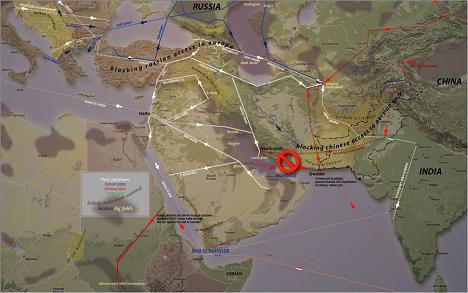
Baluchistan is strategically located East of Iran and to the South of Afghanistan. It has a port at Gwadar that was built by China. Gwadar lies at the opening of Strait of Hormuz. Baluchistan has huge quantities of natural gas, and unexplored oil reserves. More importantly US wants to control the port of Gwadar, and eventually start their dream oil pipeline from Central Asia, through Afghanistan into Baluchistan and Gwadar. Baluchistan is the largest province of Pakistan in terms of area and it covers almost 48% of Pakistan’s area. But its population accounts for only 5% of the total population of Pakistan. Ethnically Baluchistan is divided into Balochs, and Pathans, followed by other small minorities. The state capital is Quetta, (recently termed as nerve center of Taliban by US Generals).

Like all histories in South Asia, or Middle East, the history of Baluchistan is long, complex, and would require a long article to cover all the details. So a brief synopsis is sufficient to get us rolling before we come to the point.

Baluchistan has the worst human rights record out of all the provinces of Pakistan.

Baluchistan like, Afghanistan and Tribal Areas of Pakistan is a tribal society. Many different Sardars (tribal chiefs), rule their respective tribes, often with serious disregard for human rights. Development wise, Baluchistan is the most backward province in Pakistan. There may be some weight in the argument that the federal government in Pakistan has neglected the development of Baluchistan, but equal responsibility lies with the Sardars of Baluchistan who enjoy immense power in their tribes. They are unwilling to come into the main stream society, have monopoly over the laws and regulations of the state, while they themselves sit in provincial and national parliaments, yet they don’t work for the development of their own people.

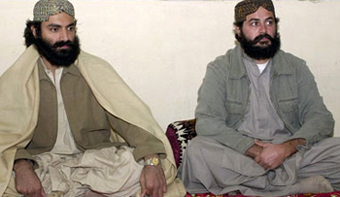
Baluchistan has the worst human rights record out of all the provinces of Pakistan. Every time horrific human rights atrocities are committed in Baluchistan tribal chiefs defend the abuses by claiming them to be part of their tribal cultural norms. Since the independence of Pakistan, most of the tribes have accepted Pakistan as their homeland and have tried to come into the mainstream Pakistani society. But Bugti and Marri tribal leaders have always been a source of trouble for Pakistan. Currently Brahamdagh Bugti (grandson of former Bugti tribe leader and former chief minister of Baluchistan, Nawab Akbar Bugti5 is the leader of a runaway terrorist group, the Baloch Liberation Army (BLA)4 operating out of Kandhar, Afghanistan. Before Brahamdagh, Balach Marri, son of Nawab Khair Baksh Marri, was leader of BLA, and he was killed in Afghanistan in 2007.

Covert Operations against Pakistan

A new dirty game of geo-politics has already started in Baluchistan, Pakistan. To understand the recent wave of violence in Baluchistan we must understand the vested interests in Baluchistan. The root cause of violence in Baluchistan is not internal poverty or lack of development but the covert operations of foreign intelligence agencies. Internal issues might act as catalysts to inflame the situation but the root cause is foreign interference in internal affairs of Baluchistan. The main group responsible for violence in Baluchistan is the BLA4. Chief of the BLA Brahamdagh Bugti, in his recent interview with Pakistani news channel AAJ TVm declared that he will attack and kill non Baloch population of Baluchistan. In other words he threatened killing of innocent Pakistani civilians on ethnic lines. This is just taking words out of Col Ralph Peter’s plan for balkanization of Pakistan, along the lines of Yugoslavia (June 2006 issue of The Armed Forces Journal). Bugti also asked for support of India and other powers to help him break away Pakistan’s Baluchistan. (For related news read two of my older articles on Axis of Logic, Playing with Fire in Pakistan, - and Now or Never. Pakistan must change its policy in war on terror).

According to Global Research scholar, Michel Chossudovsky:

“In the current geopolitical context, the separatist movement is in the process of being hijacked by foreign powers. British intelligence is allegedly providing covert support to Baluchistan separatists (which from the outset have been repressed by Pakistan’s military). In June 2006, Pakistan’s Senate Committee on Defense accused British intelligence of “abetting the insurgency in the province bordering Iran” [Baluchistan]..(Press Trust of India, 9 August 2006). Ten British MPs were involved in a closed door session of the Senate Committee on Defense regarding the alleged support of Britain’s Secret Service to Baloch separatists (Ibid). Also of relevance are reports of CIA and Mossad support to Baloch rebels in Iran and Southern Afghanistan.”

In a 2006 research article on Baluchistan which was published in Pak Tribune in 2006, Farzana Shah, a current affairs analyst for BrassTacks, a think tank based in Islamabad, highlighted the role which is being played by a British think tank against Baluchistan. Shah writes,

“In this regard the Foreign Policy Centre (FPC) United Kingdom arranged a seminar on Baluchistan province of Pakistan in collaboration with the so-called Baluchistan Rights Movement on 27th June 2006 in the House of Commons, London. It was highly disappointing as it was abashedly a one-sided cheap propaganda rather than discussing the real situation. By a mere look at the panel of the participants of the seminar one could easily figure out that it consisted of only anti-Pakistan elements and some self-styled activists advocating terrorism in the province. There were no representatives from government of Pakistan or even from the elected provincial government of Baluchistan in the seminar. It is just unfortunate that the Foreign Policy Centre which is expected to present fair suggestions to the British government to engage a country of their concern for important issues, indulged in such a blatant one-sided propaganda against Pakistan through the said seminar.”

Shah also points out in the article how a Government of Baluchistan is setup in exile in Jerusalem, Israel. She gives the details in her article.

Two Indian assets: Brahamdagh Bugti & Balach Marri (R). Marri died in an ambush in 2007 while crossing from Afghanistan to Pakistan after meeting his sponsors there.

The question is, what is the role of US, Afghanistan, India, and Iran in Baluchistan quagmire and what is at stake for these countries?

Afghanistan

Afghanistan’s soil has been used again and again to cause trouble inside Pakistan.”

Afghanistan was the only country that did not welcome Pakistan in 1947 at the time of our independence. The only time when there was no trouble inside Pakistan from Afghanistan was during the time of Taliban rule in Afghanistan. Taliban being Pukhtoon cleaned Afghanistan of Indian and Iranian assets (both India and Iran supports Northern Alliance, which is in government right now in Afghanistan). Afghanistan’s soil has been used again and again to cause trouble inside Pakistan. Currently BLA is operating from Kandahar, Afghanistan. BLA enjoys support from Indian RAW in terms of finances, logistics, and weapons. Recent report of Foreign Affairs, by Christine Fair of RAND Corporation gives us the inside.

“Having visited the Indian mission in Zahedan, Iran, I can assure you they are not issuing visas as the main activity! Moreover, India has run operations from its mission in Mazar, Afghanistan (through which it supported the Northern Alliance) and is likely doing so from the other consulates it has reopened in Jalalabad and Qandahar along the border. Indian officials have told me privately that they are pumping money into Baluchistan. Kabul has encouraged India to engage in provocative activities such as using the Border Roads Organization to build sensitive parts of the Ring Road and use the Indo-Tibetan police force for security. It is also building schools on a sensitive part of the border in Kunar–across from Bajaur (Pakistan’s Tribal Area where Pakistan Army had to carry out a major operation to eliminate TTP6 militants).

“Kabul’s motivations for encouraging these activities are as obvious as India’s interest in engaging in them. Even if by some act of miraculous diplomacy the territorial issues were to be resolved, Pakistan would remain an insecure state. Given the realities of the subcontinent (e.g., India’s rise and its more effective foreign relations with all of Pakistan’s near and far neighbors), these fears are bound to grow, not lessen. This suggests that without some means of compelling Pakistan to abandon its reliance upon militancy, it will become ever more interested in using it — and the militants will likely continue to proliferate beyond Pakistan’s control.”

Iran

Iran historically has enjoyed good relations with its neighbors including Pakistan during the time of Shah of Iran, but since then their relationship with Pakistan and Arab world has deteriorated. Strategically, Iran would like to maintain balance of power tipped in its favor in the region, this means the Pakistan’s strategic interests should be undermined, as they are at the moment. Taliban, Iran’s nemesis in Afghanistan is no longer in power, India, Iran’s ally and Pakistan’s arch enemy is enjoying a strong foothold in Afghanistan at the moment. Iran is also afraid of Jandullah’s covert operations against Iran, from Baluchistan. According to an April 2007 report by Brian Rossand and Christopher Isham of ABC News, the United States governmenthad been secretly encouraging and advising the Jandullah in its attacks.

Jandullah is a terrorist group that was created by CIA, and is responsible for terrorist activities inside Iran. Iran has spent a lot of money developing its Chabahar port, which is just 100 miles from Gwadar port of Pakistan. Gwadar port was built by China. Iran does not want Gwadar to become prominent and Chabahar to be sidelined, especially since Iran is isolated in the world at the moment. Iran has huge reserves of gas and it would like India to gain access to these reserves since India is its ally and Iran-India friendship will grow if India can gain access to Iranian gas reserves. Iran would also like trade with India to increase in future.

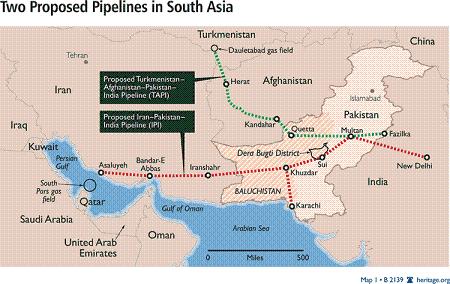
TAPI: Turkmenistan, Afghanistan, Pakistan, India

IPI: Iran, Pakistan, India

India

India also believes that an independent Baluchistan will likely become a proxy of Iran, India and Afghanistan.”


India is Pakistan arch enemy, first of all India has never accepted Pakistan as an independent sovereign nation. India was directly responsible for breakup of East Pakistan and formation of Bangladesh. India and Pakistan have fought three wars with each other. India is at the moment chief regional ally of US, and NATO. India believes that Pakistan is at the brink of break up and India must focus on building its relationship with Central Asia, Iran, and Afghanistan, and capture oil and gas reserves from Central Asia and Iran, through Afghanistan and Pakistan. India also believes that an independent Baluchistan will likely become a proxy of Iran, India and Afghanistan. Capt (r) Bharat Verma of Indian Defense Review, writes,

“That New Delhi is its own enemy became obvious, when it permitted the creation of a pure Islamic State on its borders. This nation-state contradicts every democratic and multi-cultural value dear to India. Therefore, if New Delhi has not slept a wink since the creation of Pakistan, it has no one except itself to blame! Many conveniently propose the myth that a stable Pakistan is in India’s interest. This is a false proposition. The truth is that Pakistan is bad news for the Indian Union since 1947-stable or otherwise. With Pakistan on the brink of collapse due to massive internal as well as international contradictions, it is matter of time before it ceases to exist. Multiple benefits will accrue to the Union of India on such demise.”

Verma Continues

“If ever the national interests are defined with clarity and prioritized, the foremost threat to the Union (and for centuries before) materialized on the western periphery, continuously. To defend this key threat to the Union, New Delhi should extend its influence through export of both, soft and hard power towards Central Asia from where invasions have been mounted over centuries. Cessation of Pakistan as a state facilitates furtherance of this pivotal national objective.

“The self-destructive path that Islamabad chose will either splinter the state into many parts or it will wither away-a case of natural progression to its logical conclusion. In either case Baluchistan will achieve independence. For New Delhi this opens a window of opportunity to ensure that the Gwadar port does not fall into the hands of the Chinese. In this, there is synergy between the political objectives of the Americans and the Indians. Our existing goodwill in Baluchistan requires intelligent leveraging.”

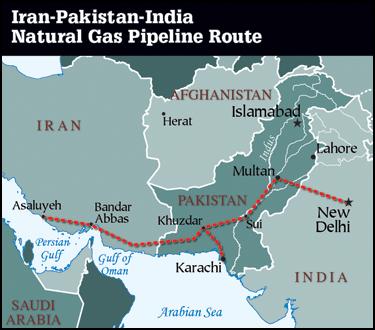
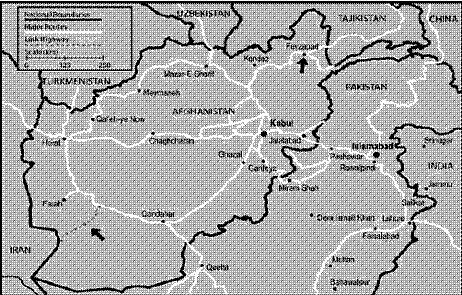
India does not have natural gas reserves, and it desperately needs gas from Iran. But US is against Iran-Pakistan-India (IPI) pipeline. If IPI project comes through than the stability and security of Iran, Pakistan and India will be in the interest of these respective countries. US would not like this, since it takes away an important leverage from a superpower, that of playing one nation against another. US have proposed the idea of Independent Baluchistan, which India does not mind at all. India has gained strong foot hold inside Afghanistan. A road link connects Iranian port of Chabahar to Afghanistan. India has built a ring-road inside Afghanistan linking Iran to Afghanistan. With back channel diplomacy going on between Iran and US, India and Iran both would like NATO and US supplies to go through Chabahar, Iran rather than Karachi, Pakistan. India strongly believes that Independent Baluchistan is inevitable and is casting all its bets on this deal.

Road link from Iran into Afghanistan
(see checkered line, lower left arrow)

Washington’s interest in Baluchistan

“It is imperative the Baluchistan, an energy rich province must not come under control of China.”

According to a study titled “Baloch Nationalism and the energy politics of energy resources: the changing context of separatism in Pakistan”, by Robert G.Wirsing, of Strategic Studies Institute, a think tank of U.S army, it is imperative the Baluchistan, an energy rich province must not come under control of China. China built Gwadar port, and would like to expand more trade and energy routes through Pakistan via Baluchistan.

To begin with China is interested in a gas pipeline from Iran through Pakistan’s into Western China. This is something that is not acceptable to US. China could station some of its naval ships at Gwadar in future should the need arise to provide security to its cargo; this is again something that is not acceptable to US. On the list of US agenda is to secure the Indian Ocean and its strategic routes, and Gwadar right at the mouth of Strait of Hormuz is one of those routes. As mentioned before US is using Baluchistan as a base to carry out covert operations against Iran using Jandullah. After 9/11 US is also using an airfield of Pakistan Air force in Baluchistan for its operations in war on terror.

The U.S. is looking into taking direct control of Gwadar, possibly by capturing Gwadar port, so that they can make a land route through Baluchistan into Southern Afghanistan, this will give them an alternate supply route for their troops. Baluchistan must be under US control so that gas pipelines from Central Asia can pump gas through Afghanistan into coast of Baluchistan. The US believes that Balkanization of Pakistan and setup of independent Baluchistan will dismantle the hope of resurgent Pakistan in the near future, paving the way for a dominant Iran taking control of Middle East while India will be able to take control of South Asia including Afghanistan. Brzezinski believes that Iran not Arab world is the natural ally of US in the Middle East. The current US government is using the foreign policy ideals of Brzezinski, which calls for using Islamic militant and Iran against China and Russia.

Conclusion

The solution of Baluchistan lies with a strong government in Islamabad that is a nationalist government and not a puppet of IMF/WB/CIA.


Current Pakistani government is not able to safeguard Pakistan’s national interests. When Zardari3 became president he authorized release of many BLA terrorist who were held up by security forces in detention. BLA has gotten ample time to regroup and re-arm during the last few months. It is very interesting that the current Chief Minister of Baluchistan, Nawab Aslam Raisani before becoming CM, said in an interview, “We will not go for any type of compromise,” says Nawab Raisani. “We want total autonomy.”

According to author of bestselling book, ‘The Way of the World’, Ron Suskind, Raisani is on the payroll of top western intelligence agencies. Given the level of US penetration in Pakistan’s domestic politics it is no surprise.

The solution of Baluchistan lies with a strong government in Islamabad that is a nationalist government and not a puppet of IMF/WB/CIA. There should be no doubt in anyone’s mind that BLA does not represent the aggrieved Baloch people. BLA is a terrorist outfit and it must be dealt with accordingly. We need to get rid of this government that is working nothing like a democracy. Key decisions are taken by either Zardari or his important Washington approved advisors. We need a new setup of nationalist that are willing to stand up to US and make independent policy decision in the best interest of Pakistan. To counter the growing influence of India, Iran and US in Baluchistan it is a must that old contracts with China be renewed and new development projects must be initiated with Chinese help. The local population of Baluchistan must be given more shares in jobs and resources. This is only achievable if we have patriots in the provincial government of Baluchistan, not scoundrels who are abusing patriotism for their personal greed.

The problem for US is that BLA alone is not able to break away Baluchistan from Pakistan. Of the 5% population of Baluchistan they don’t even have support of 10% Balochi population. The Pakistan Army and ISI are resisting the assault in national and strategic interests of Pakistan. The Great Game of Brzezinski will surely continue in Baluchistan and rest of Pakistan, the people of Pakistan are ready to counter this great game now we need leadership and some courage. It will take some time to achieve courage and leadership but it will come eventually. Street revolutions are easy to carry out the hard part is the mental revolution. That is what is required right now to challenge the US global hegemony.

Glossary of Terms and people mentioned

1. Pervaiz Musharraf is former dictator-turned- president of Pakistan. He was forced out of office due to the assassination of Benazir Bhutto and his loss of support by his former sponsor, the U.S. government.

2. The Pakistan People’s Party (PPP) is the ruling political party under President Zardari.

3. Asif Ali Zardari is the current president of Pakistan. He is the former husband of Benazir Bhutto and came into power on her coat tails after she was assassinated. He is also the son of veteran politician Mr. Hakim Ali Zardari. Mr. Zardari is commonly known in Pakistan as “Mr. Ten Percent” due to his well-known cuts on various government deals.

4. BLA is Baloch Liberation Army, officially declared a terrorist outfit by Pakistan, US and UK. Is responsible for various terrorist activities in Pakistan that includes killing civilians, security forces, and blowing up natural gas pipelines.

5. Nawab Akbar Bugti was former head of the Bugti tribe of balochistan, also 13th governor of Baluchistan and the 5th Chief Minister of the province. He and his family favored creation of Pakistan. Bugti was killed on Aug 26th 2006 in a military operation when he was surrounded in a remote hill in Baluchistan.

6. Tehrik-e-Taliban Pakistan (TTP) is the main anti-government party in Pakistan at the moment. Because the TTP bears the name “Taliban” the western media often confuses them with the Taliban in Afghanistan. This is a grave mistake. The Afgan Taliban rejects the TTP. The TTP views the ANP to be pro-US and part of the pro-US Pakistan government. The TTP is a group based on Takfiri ideology (a Muslim who believes that all other Muslims, even orthodox Muslims are not true Muslims. They view all others as collaborators with the West. All Muslim scholars are unanimous in declaring Takfiris ‘heretics of Islam....

Thursday, April 23, 2009

The Great Geoplotilical game is still on unabated under Obongo...


The Great Geoplotilical game is still on unabated under Obongo...


The current crisis in Moldova ... is part of the same continuum of geo-strategic events and crises in Eurasia extending from Asia to the Middle East and Eastern Europe... (The "New Great Game" in Eurasia is being fought in its "Buffer Zones" )

Two types of regime change:

1. "Colour revolutions" characterized by political struggles and civil strife invariably triggered through U.S.-NATO interference and covert intelligence operations:

Lebanon,

Burma (Myanmar),

Ukraine,

the former Yugoslavia,

Uzbekistan,

Kyrgyzstan,

Tibet,

and Georgia.

2. Outright military intervention:

Afghanistan, Pakistan and Benazir Buttho's assassination by the White House Murder INC, South Asia section.....

and the Anglo-American invasion of Iraq...

The U.S. and the E.U. are behind the fighting and instability in Darfur

-
The "New Great Game" in Eurasia is being fought in its "Buffer Zones"

Harman...
Jewish Correspondent Andrea Mitchell, wife of Jewish former Federal Reserve chairman Alan Greenspan, interviews Jewish Rep. Harman on her involvement with the Jewish lobby, and an alleged Jewish spy....

Informed Comment: Harman Scandal: All about War on Iran

Press can't say it, but a blogger can (Jane Harman's Jewish)

Antulay, a government minister, suggested there might be a link between the killing of Karkare and Karkare's investigation of the Malegaon blast (thought to be the work of Hindus with links to India's military and police).

Mumbai terror probe: Rane, Antulay to be quizzed / 26/11 defence to call Antulay, Rane to depose

POLICE STORY ON MUMBAI ATTACKS STANDS SHATTERED

Warder accused of Jersey child abuse faces new charges

Budget threatens jobs as unemployment soars

Spot the Difference


"My hard drive suddenly spins more frantically than ever, whenever I visit politically sensitive sites, presumably as it struggles to send the details of my browsing off to servers in USA and Tel Aviv, or wherever... " - Bugged bloatware

Free and Fair Elections (1)

Australia sucks Israel's cock

South Africa....:

...Zille took over from Tony Leon, who is an avowed neocon. My SA sources said that if Leon was PM, South African troops would have been in Iraq and Afghanistan.

Zille and Leon are close allies.

http://shafiur.i-edit.net/?p=18

Well, it seems that the media in South Africa are still not running with the scandal of the Washington lobbyist Abramoff and his shady links with apartheid spooks and Tony Leon. Wayne Madsen says he has been threatened after he published his exclusive, and the Mail and Guardian in South Africa which made mention of this dirty business on the 20th January in an article by Claudia Braude headlined “A blast from the past” and “United States scandal revives apartheid-era dirty tricks of top Democratic Alliance official” does not feature the article on the web anymore. Spooky or what? And are the ANC too mired in their own scandals to highlight it?

---

Soros is a major backer of these so-called "neo-liberal" groups like Democratic Alliance. BTW, Soros's U.S. organization is "Democracy Alliance." Anyone for a "themed revolution?" His Orange revolutions were used in Ukraine and Kenya....
.


Wednesday, April 22, 2009

The calibrated collusive collaboration of Pakistan, ISI and the Pentagon will fragment the whole South Asia


The calibrated collusive collaboration of Pakistan, ISI and the Pentagon will fragment the whole South Asia....

Introductory Observations

Pakistan today is in dire straits where its very existence as a nation state is at stake. Pakistan’s creeping Talibanization is no longer creeping but now galloping from its explosive western peripheries to the very heartland of Punjab. The United States and the West stand focused on this menacing development for months now.

Pakistan’s galloping Talibanization is no longer a strategic menace for the United States and NATO Forces in Afghanistan only, or far that matter to India. Pakistan’s Talibanization has emerged today as an untreatable or malignant cancer afflicting Pakistan’s survival.

The United States and the West, long sedated by General Musharraf during his eight years military rule with duplications assurances on Pakistan Army’s committal to liquidate the Al Qaeda and the Taliban, continued in a “state of denial” on Pakistan Army’s perfidy, constantly highlighted by this Author in his Papers on Pakistan on SAAG website and elsewhere.

Pakistan’s meltdown and prospects of a civil war was covered in a consolidated Paper by this Author (SAAG Paper No. 2570 dated 29 January 2008) based on cumulative analysis of the previous five years. This Paper was entitled “Pakistan at Sixty: Meltdown and Prospects of Civil War.”

Nurtured by years of adulating the Pakistan Army as the glue that holds Pakistan together and denied access to analytical reports highlighting the military failures of the Pakistan Army in its wars with India from 1948 to Kargil War in 1999, Pakistan’s own strategic community was in a state of denial about the unholy and diabolical operations of the Pakistan Army and the ISI (intelligence organization) under its control.

Pakistan’s abject surrender in Swat of the state sovereignty and ceding a large tract of territory on the very steps of the national capital Islamabad has finally hit home and painfully hard on Pakistan’s strategic community, its academia and its civil society, however limited.

Their pain and horror is that much more because the western-aligned President Zardari maneuvered to get the National Assembly “to share his shame” (as one Pakistani Columnist put it) to rubber stamp endorsement of his signature on the law authorization of Sharia in Swat.

It was left to Ayaz Amir, the noted Pakistani Columnist, a former Pakistan Army officer and now a parliamentarian to reflect this anguish in his column “Wages of Fear and Appeasement” (The News, April 17, 2009). His anguished words which will echo in Pakistan need to be reproduced in original.

“When a state and its military forces mentally reconcile themselves to defeat, one can only mourn the event. There is nothing left to say.”
“But we are trying to put a gloss on it and are putting forward all sorts of justifications – that there was no way out and that signing the Nizam – e – Adul regulation will bring lasting peace to Swat and its environs – but in out heart of hearts we know that, our courage having fled and no vision worth the name to guide us, we have acquiesced in a great act of surrender”.
“Munich is written all over it”.
“Before India our Eastern Command laid down its arms in 1971, not its spirit or soul. Before the Taliban in Swat we have ceded a part of out national soul.”
Pakistan Army’s abject surrender of Swat sequentially crowns a long list of surrenders to the Taliban of Pakistan’s state-control of frontier regions along the Afghan border beginning with the infamous Waziristan Accords. In Swat, the Pakistan Army has surrendered to the Taliban in the hinterland too.

The United States and the West having invested in billion of dollars on the Pakistan Army and still persist in doing so as evidenced by the pledges made on April 17, 2009 at Tokyo meeting of “Friends of Pakistan”, should now feel entitled to question as to why the Pakistan Army has been an abject and mute spectator to the Talibanization of Pakistan.

The people of Pakistan too should be asking the Pakistan Army the same questions having denied themselves for 60 years, democracy and development, to sustain Pakistan Army’s grandiose military adventurism against India.

Pakistan Army’s accountability on the galloping Talibanization of Pakistan needs to be asked for, as to why this over-glorified Army has failed the people of Pakistan and its strategic patrons in not stemming the tide of Talibanization, This apparent military inaction of the Pakistan Army in not effectively combating the Taliban menace raises two separate questions as follows:

Pakistan Army – Is it in an inglorious retreat against the Taliban advances?
Pakistan Army – Is it involved in a calibrated and collusive collaboration with the Taliban for strategic reasons?
This Paper attempts to analyze the above under the following heads:

NWFP and FATA Regions: Talibanization Virtually Complete
Pakistan Army in Inglorious Retreat or Calibrated Collusive Collaboration with Taliban for Strategic Reasons?
United States AF-PAK Strategy Unravels
Pakistan: The Prospects of a Civil War.
NWFP and FATA Regions: Talibanization Virtually Complete

Pakistan’s NWFP and FATA regions bordering Afghanistan and of critical strategic interest to the United States, stand fully Talibanized, courtesy the Pakistan Army for whatever reasons.

The prospects of this taking place and the hard decisions that would be so forced on the United States was analyzed by this Author as far back as January 2006 in his Paper (SAAG Paper No. 1688 dated 25.01.2006) entitled “Pakistan’s Explosive Western Frontiers and Their Impact: An Analysis”.

Tthe strategic impact on the United States can be read in the quoted Paper. However the observations made on Pakistan were that this explosiveness on its Western frontiers would be “suicidal” for Pakistan. Two major points from this Paper of contemporary pertinence need to be highlighted:

“Pakistan in all these decades could smugly indulge in military adventurism against its predominant neighbour India, chiefly because its western frontiers were not explosive.”
“Pakistan’s revived strategy of Taliban resurgence via the Waziristan route may result once again in an over-stretch of Pakistan Army, continued explosiveness in NWFP and generate in its wake many crucial contradictions in Pakistan, domestically.”
Nemesis can be said to have caught up with Pakistan and the Pakistan Army where today the border region of NWFP and FATA depict the following pattern of Taliban control:

Full Taliban Control: The entire border areas of NWFP and FATA are under “Full Taliban Control” with two exceptions of Kurram and Chitral which are still contested.
Contested Taliban Control: An intermediate stretch between the border regions and the settled areas, a narrow strip is both contested between the Taliban and Pakistan Army.
Taliban Influence Areas: This comprises the settled areas bordering the Pakistan heartland and in this the Taliban has penetrated and can be said to be establishing influence.
Government Control: Only two regions of Abottabad and Haripur
Therefore, for all practical purposes of state sovereignty Pakistan has ceded control of NWFP and FATA to the Taliban. This is a severe indictment on the Pakistan Army's professionalism as the guardian of Pakistan.

For details of the various regions in terms of these three broad categorization of Talibanization control of NWFP and FATA, please refer to Annexure attached.

Pakistan Army in Inglorious Retreat or Calibrated Collusive Collaboration with Taliban for Strategic Reasons?

Pakistan Army has been projecting to the United States that it has more than 100,000 troops deployed in the NWFP and FATA engaged in military operations against the Al Qaeda and Taliban. If that is a military truth then it is inconceivable as to how the professionally renowned Pakistan Army, has failed to prevent the Talibanization of NWFP and FATA. This has not only endangered US strategic interests in Afghanistan, raised questions about Pakistan Army as a reliable strategic interest in US strategic calculations, but by ceding Pakistani territory to Taliban control has endangered Pakistan’s survival as a nation state.

Pakistan’s noted strategic expert, Ahmed Rashid, especially on AF-PAK affairs and intensely consulted by the United States presently, has implied that the Pakistan Army has been in an inglorious retreat against the Taliban. Some important observations made by him lately are pertinent:

“Rather than order the Pakistan Army to retake Swat, the PPP Government have capitulated to Taliban demands to avoid more violence”.
“Deal may be interpreted as an unmistakable defeat in the country’s losing battle against Islamic extremism”.
“Pakistan Army is demoralized and overstretched and has refused United States offers to retrain its regular forces in counter-insurgency”.
“Pakistan Government and the Pakistan Army have lost the will and capability to oppose the Taliban”.
As a strategic analyst, this Author in his opinion finds it hard to believe that the Pakistan Army has lost the will and capability to fight the Taliban. On the contrary, this Author strongly feels that General Kayani and the Pakistan Army have indulged in a calibrated, and collusive collaboration to let the Taliban over-run Pakistan’s western frontier regions of NWFP and FATA for strategic reasons to pressurize the United States.

It would not be a conspiracy theory or a cynical strategic analysis to assert the following:

Continued explosiveness in NWFP and FATA contributes to retention of centrality of Pakistan Army in United States strategic formulations in this region with particular relevance to Afghanistan.
Such centrality of Pakistan Army especially in the AF-PAK context would force the United States, despite a civilian government on Islamabad, to deal directly with Pakistan Army GHQ in Rawalpindi.
Pakistan Army in such a calibrated strategy would place its bargaining chip on the table for the United States – the ISI under the Pakistan Army has a central role in helping US operations against the Taliban, USA should concede this role and stop criticizing the ISI.
As another quid-pro-quo make the United States to prevail over India for compromises on Kashmir and demilitarization of Kashmir and prevail over Afghanistan to recognize the Durand Line.
A detailed analysis of this calibrated strategy can be found in this Author’s Paper (SAAG Paper No. 3079 dated 03.02.2009) entitled Pakistan’s Talibanization is No Strategic Threat to India” and under the group heading “Pakistan’s Talibanization Facilitated by Pakistan Army Ceding Strategic Space by its Withdrawals from Frontier Regions”.

The Pakistan Army seems to be convinced in the belief that its well-crafted blueprint would ensure that it can retain calibrated control over Taliban escalation.

At best it can divert the Taliban drives towards India in Kashmir as part of its calibrated control. At worst, the Pakistan Army under intense American coercion could ultimately confront the Taliban in he plains areas of Pakistan with its traditional ruthlessness.

On both counts analysed above strategic concerns are generated for USA and the West and by extension to India.

United States AF-PAK Strategy Unravels

The United States major drawback in its strategic management of Pakistan has always been its single-point over-reliance on Pakistan Army Generals to deliver on its strategic objectives. Presently in Pakistan the United States has in place a decidedly pro-American Pakistani President and a perceived US inclined Pakistan Army Chief.

While the United States may persist in projecting that General Kayani is not a “political general” and would like to keep his nose out of politics, the record of the last year or so indicates otherwise.

President Zardari and PM Gilani had months back asserted that they have full faith in entrusting the sole responsibility for military operations in NWFP and FATA without political interference to the Pak Army Chief.

What have been the results of such a policy and the innumerable dialogues between General Kayani and US military hierarchy?

The state of affairs emerging in Pakistan hardly provide any sense of optimism that the United States AF-PAK strategy would succeed. On the contrary it may unravel even before it takes off.

One of the main props of the AF-PAK strategy is socio-economic development of the border regions of NWFP and FATA. Pray one may ask as to how the United States can achieve this when these regions are no longer under Pakistan Army control but under effective control of the Taliban.

The United States may be left with no choice but to reverse its priorities in AF-PAK Strategy from retrieving Pakistan from state-failure to reclaiming Afghanistan and assist nation-building as a bulwark against the impending chaos that is likely to engulf Pakistan.

Pakistan: The Prospects of a Civil War

The prospect of a civil war in Pakistan stands pointed out in my SAAG Papers quoted above. Such assertions then used to be met with amused reactions as the very thought seemed preposterous. But eminent Pakistanis too are seized with this worrisome prospect especially after the events of Swat.

Former Pakistan Ambassador Zafar Hilaly makes his concern in historical comparisons. In a recent commentary he has made the following observations.

“The Taliban are the 21st Century Mongols. Their mission too like that of 12th Century Mongols is to destroy the culture, faith and way of life to their opponents and to capture and kill if they resist. But unlike the Mongols hordes they (Taliban) do not simply terrorise the land like a swams of locusts, instead they stay.”
“The situation in Pakistan today is like a Greek tragedy: we all know the end but are powerless to prevent it.”
Rather ominous words coming from a thinking Pakistani. Another eminent Pakistani strategic and political analyst Ayesha Siddiqa states:

“Finally, we have a state that does not have any clue about where it wants to be in this century”.
“People have classifications for weak states such as banana republic, a term many despise”.
“Probably the right term for Pakistan is the “Jalebi Republic”, circles within circles and no clarity about the future”.
Many analysts in Pakistan have began to draw conclusions comparing the situation in Pakistan to the 1971 scenario when as a result of Pakistan Army transgressions, East Pakistan seceded to emerge as an independent entity of Bangladesh.

Close advisers to the Obama Administration are virtually coming to the same conclusion like David Kilcullen who has asserted that Pakistan could be facing an internal collapse within six months.

Concluding Observations

Pakistan and the Pakistan Army seem to have reconciled themselves to defeat at the hands of the Taliban and Swat portends that Pakistan Army’s abject indifference to uphold national integrity has ceded its national soul as observed by Ayaz Amir. He has always like may other thinking Pakistanis have been strong defenders of Pakistan’s honor. The seriousness of Pakistan’s crisis today echoes strongly in his words and many like him.

The United States with the most critical and massive strategic stakes in Pakistan’s stability needs to do a quick rethink and recast its AF-PAK strategy. The Pakistan Army cannot be counted as a reliable strategic asset in US strategic formulation for the region.

The United States has the strategic, political, military and financial leverage to bring around the Pakistan Army to stem the tide of Talibanization.

India has not contributed to the creation of the Taliban or the galloping Talibanization of Pakistan under way. The Pakistan Army is solely responsible for the grim state of affairs in Pakistan and the United States should call it to accountability, if for nothing else, to account for the billions of dollars invested in it to serve US strategic objectives.

Israel's second largest naval base is on Eritrea's DAHLAK Islands


A lodge on an island
A lodge on an island (Dahlak Kebir )

After the Zionist attack on Lebanon, the Sanaa-based Yemeni daily Al-Thawra published an interesting piece of information. It said that Israel had transferred three warships from its military base on Eritrea’s Dahlak Island on the Red Sea to support their military operations against Lebanon.

Official sources noted that Israel is creating the biggest naval base outside Israel on the Dahlak Island.

This followed an agreement between Eritrea and Israel signed in 1995. Eritrea used Israeli warships and huge logistical support from that naval base during its occupation of the Yemeni Hunaish Island in 1996. The sources disclosed that Israel has presence on two Eritrean islands: Dahlak and Fatma. The Israeli nuclear wastes are accumulated in these islands. Israel also has monitoring centers on the Red Sea to oversee the Kingdom of Saudi Arabia, Yemen, and Sudan in addition to oil movements.

The Eritrean Foreign Ministry refuted the news item denying the existence of any Israeli base on their Islands. However, an intensive study carried out by the Center for Political and Strategic Studies and published by Al-Ahram in June 2006 titled “Isaias Afewerki’s Regime and Developing Relations with Israel” confirmed that the issue was much bigger than the Israeli military bases on Eritrean soil. It revealed a strategic relationship between the two governments that began with Eritrea’s President Isaias Afewerki traveling to Israel for medical treatment in 1993.

Afewerki was transferred to Israel by an American airplane. The US representative in the Eritrean capital Asmara was the one who suggested the idea after the Eritrean leader fell ill. These happenings along with American efforts led to the opening of an Israeli Embassy in Asmara in March 15, 1993 prior to the official announcement on April 27, 1993.

There also has been an inclusive agreement between the two countries that was signed officially in March 1993 by Israel’s Prime Minister Yitzhak Rabin and Eritrean President Afewerki.

According to the Center for Political and Strategic Studies’ report, Israel has some clear motives for establishing and improving ties with Eritrea. They wanted Eritrea to become the most important strategic ally to the Zionist entity in every corner of the Horn of Africa and the Red Sea. Their motives can be summed in two points:

  1. The geostrategic importance of the 360 Eritrean islands, especially Dahlak and Fatma islands. They are located in the southern gateway of the Red Sea occupying some 1080 kilometers. The two islands have important features that affect the international and regional naval balance. The two islands can also be used for stationing marine and land forces and for monitoring all naval activities in the region. Israel thought that by controlling these islands it can avoid any Arab attempts to impose a naval blockade on Israel under any circumstances. Israel’s presence on the islands will also stop the Red Sea from turning into Arab waters.
  2. Another advantage is the importance of Eritrea’s location in serving the Israeli strategies in motoring and spying on Saudi Arabia, Yemen, and Sudan. The three countries are not Israel’s allies. In 1998, the British “Foreign Report” bulletin, specializing in intelligence affairs, reported that Israel maintains close intelligence relations with Ethiopia and Eritrea, and that the Israeli spy agency Mossad has established in the Ethiopian capital, Addis Ababa, a center for gathering intelligence information.

According to the British weekly, Eritrea permits Israel to carry out vast activities on Dahlak Island on the Red Sea. Because of the presence of the Israelis on this island, the Mossad can carry out monitoring operations and collect important information about Yemen and Saudi Arabia....

The Foreign Report bulletin also stated that the Mossad has a very active intelligence gathering station not far from Eritrea’s borders with Sudan....


http://www.washingtonpost.com/wp-dyn/content/article/2009/04/21/AR2009042103998.html